.svg)
.avif)
Designing Homes Inside a Forest : Architecture That Yields to the Land
At Organo Aloor, the ambition is not to place architecture on terrain but to let architecture co-create and then be absorbed by it. This distinction is crucial. Many contemporary residential projects speak about preserving greenery, but few reorganise their design priorities so fundamentally that the land becomes the first designer and the building merely the second. Here, the forest is not a backdrop; it is the primary generator of form, orientation, programme, and spatial experience.
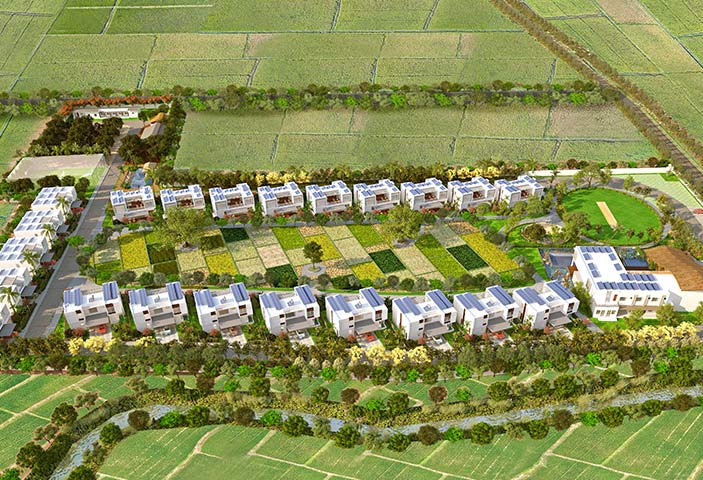
Aloor sits within a richly textured ecological zone—undulating soil pockets, a few hardy native trees, existing water movement lines, and breezeways shaped by latitude and rural openness. The design team approached the site not as a blank slate but as a layered manuscript. Existing trees were mapped individually; and shadow behaviour across seasons was documented. This reading of the land resulted in a master plan where the built footprint is kept deliberately fragmented, never asserting dominance over the terrain.
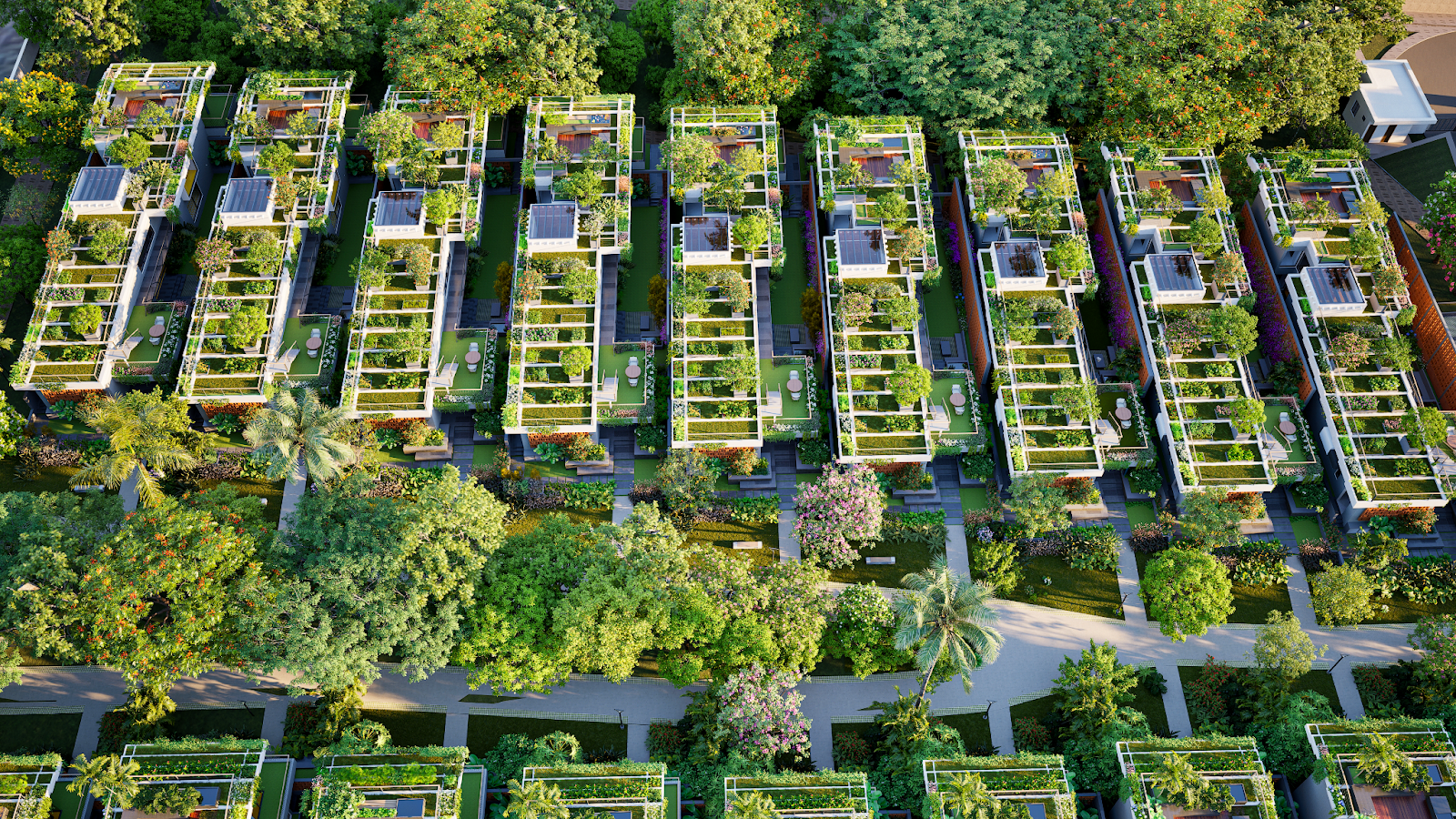
Rather than cutting into the land, villas are positioned between tree clusters and along natural hydrological channels. Cluster-level planning ensures that each group of homes has a unique ecological identity. Instead of forcing uniformity, the architects allowed the land’s own logic—its bumps, textures, and irregularities—to choreograph the placement. The result is a settlement that feels “grown,” not “built.”
Key to Aloor’s design strategy is the idea of ecotones: transitional spaces where two habitats meet. The villas make use of outdoor courtyards, semi-open decks, verandas, breezeways, and roof gardens to soften the shift between interior and exterior. These spaces are not ornamental add-ons; they are microclimate moderators, light diffusers, and ecological entry points. Daylight is allowed to enter softly from varied angles, filtered through pergolas, trees, and green roofs.
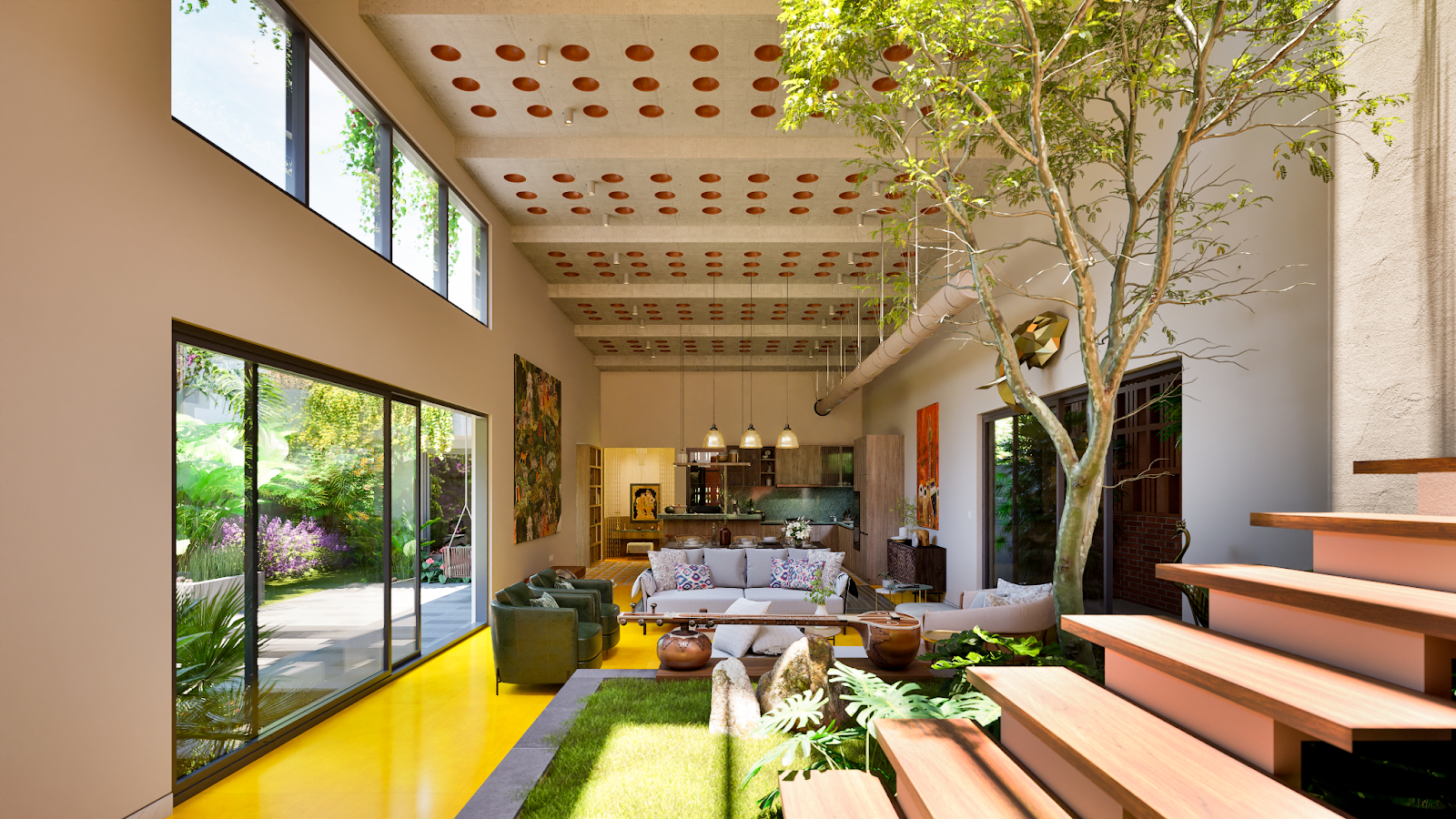
Materiality is equally responsive. Stone, timber, textured finishes, terracotta, and muted earth tones create a palette that feels continuous with the forest floor. These are not rustic gestures but carefully selected materials that age gracefully and blend rather than stand out. The architecture avoids shiny surfaces or synthetic screens that would visually rupture the natural calm. Instead,the aesthetic is quietly contemporary—clean-lined yet warm, structured yet porous.
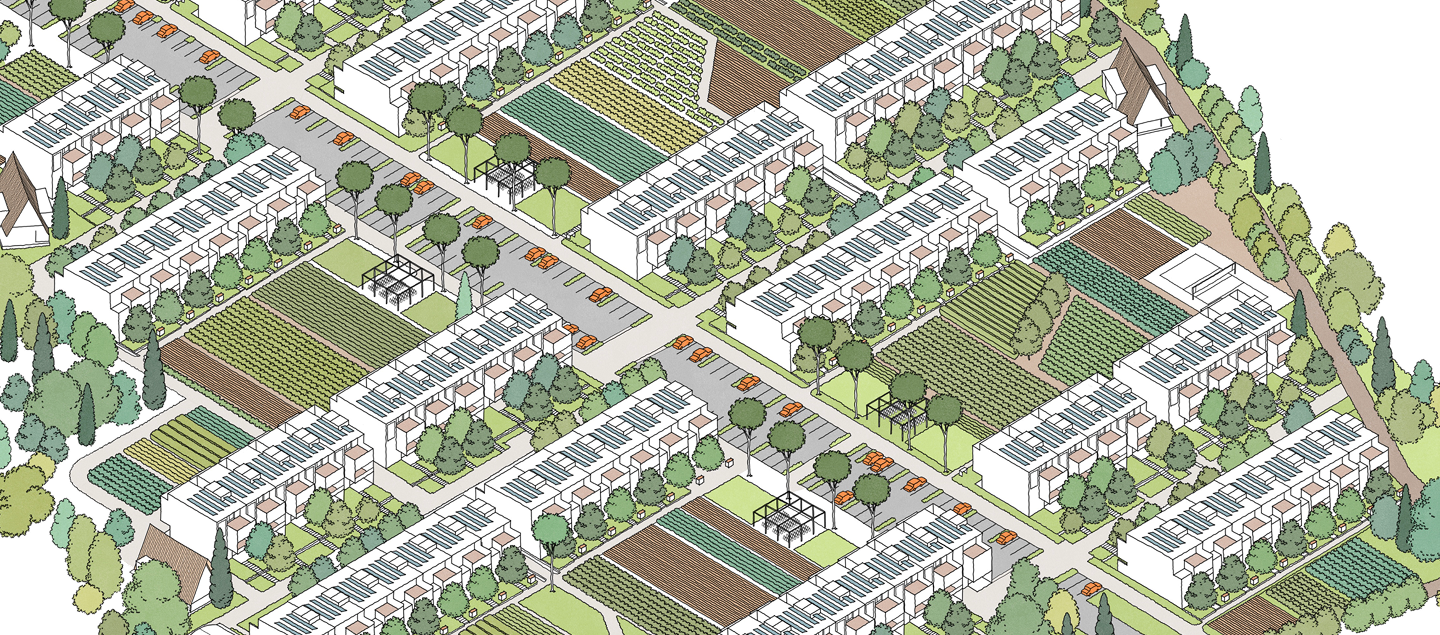
One of the most significant design decisions is the restraint in road networks and vehicular movement. Cars are pushed to the periphery, allowing the interiors of the community to function like a forest village. Pathways are shaded, and pedestrian-first. This gesture does more than reduce heat; it creates an atmosphere where sound is softened,wildlife is unthreatened, and people move at a human pace. The forest is allowed to breathe, visually and acoustically.
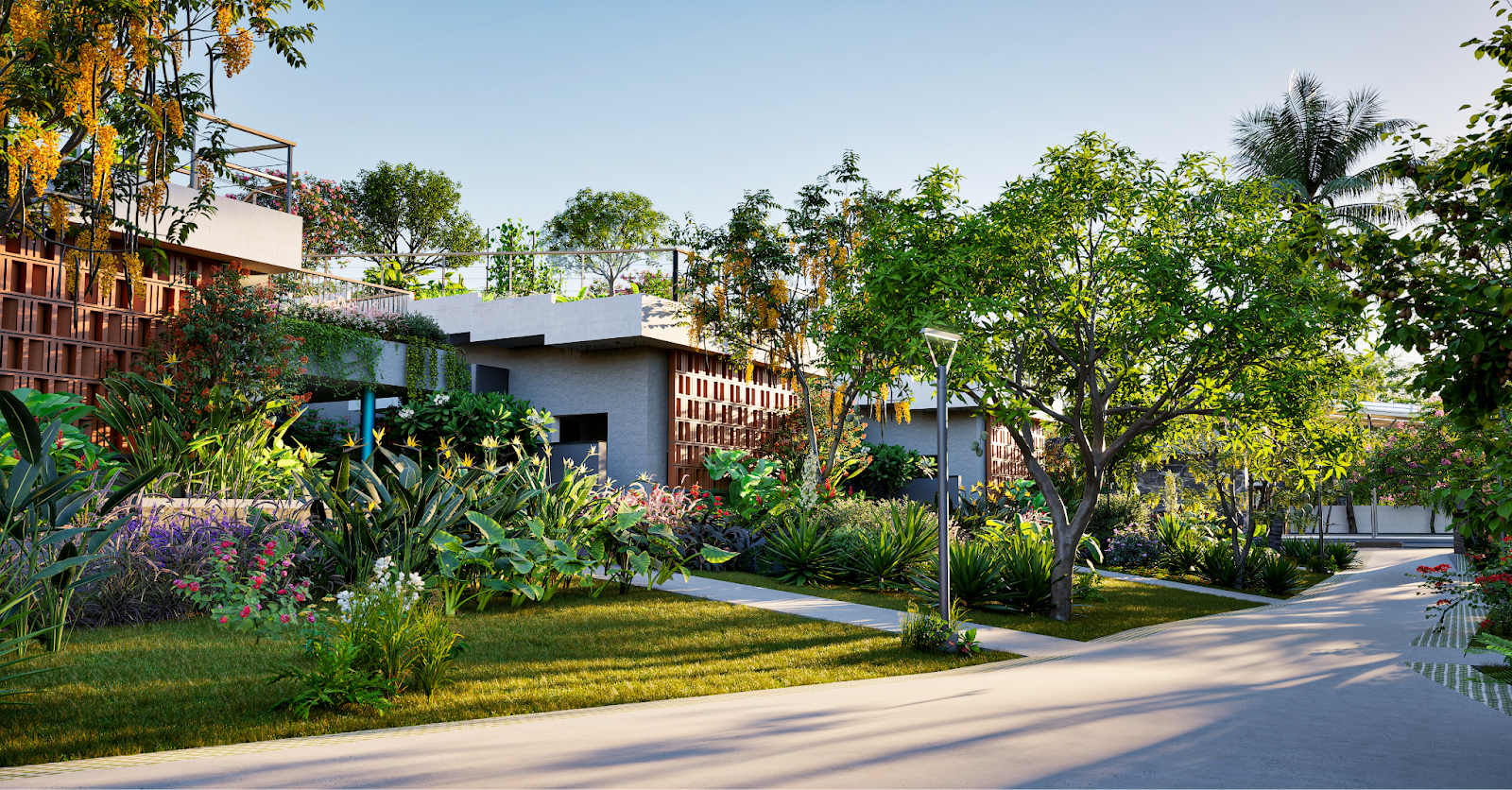
Aloor’s approach signals a shift in the way suburban living can be conceived in India. This is not simply “green living” as a lifestyle tag; it is an architectural ethic that respects the agency of the land. In a time when development often flattens ecological memory, Aloor demonstrates how design can revive it.
The architecture does not attempt to dominate the forest.
It attempts to live within it.
Related blogs


%2520(1).jpeg)
.png)