.svg)
.avif)
Designing Nostalgia: Reimagining the Small-Town Street for Organo Palgutta
Author: Meena Murugappan, Director (Product Strategy & Innovation)
Small towns in South India—Warangal, Vijayawada, Rajahmundry, Nellore, Ongole—hold a rare kind of emotional gravity. For many of us, they are the backdrop of our earliest memories: walking to school past temple gopurams, buying hot bajjis from the street-side cart, waiting at the cycle repair shop while our punctured tyres were being mended, sitting on plinths shaded by neem trees, and watching festivals transform ordinary lanes into vibrant living theatres.
At Organo Palgutta, we are working with a question that goes beyond design:
:How can a street make you feel like you’ve come home—even if you’ve never lived there before?
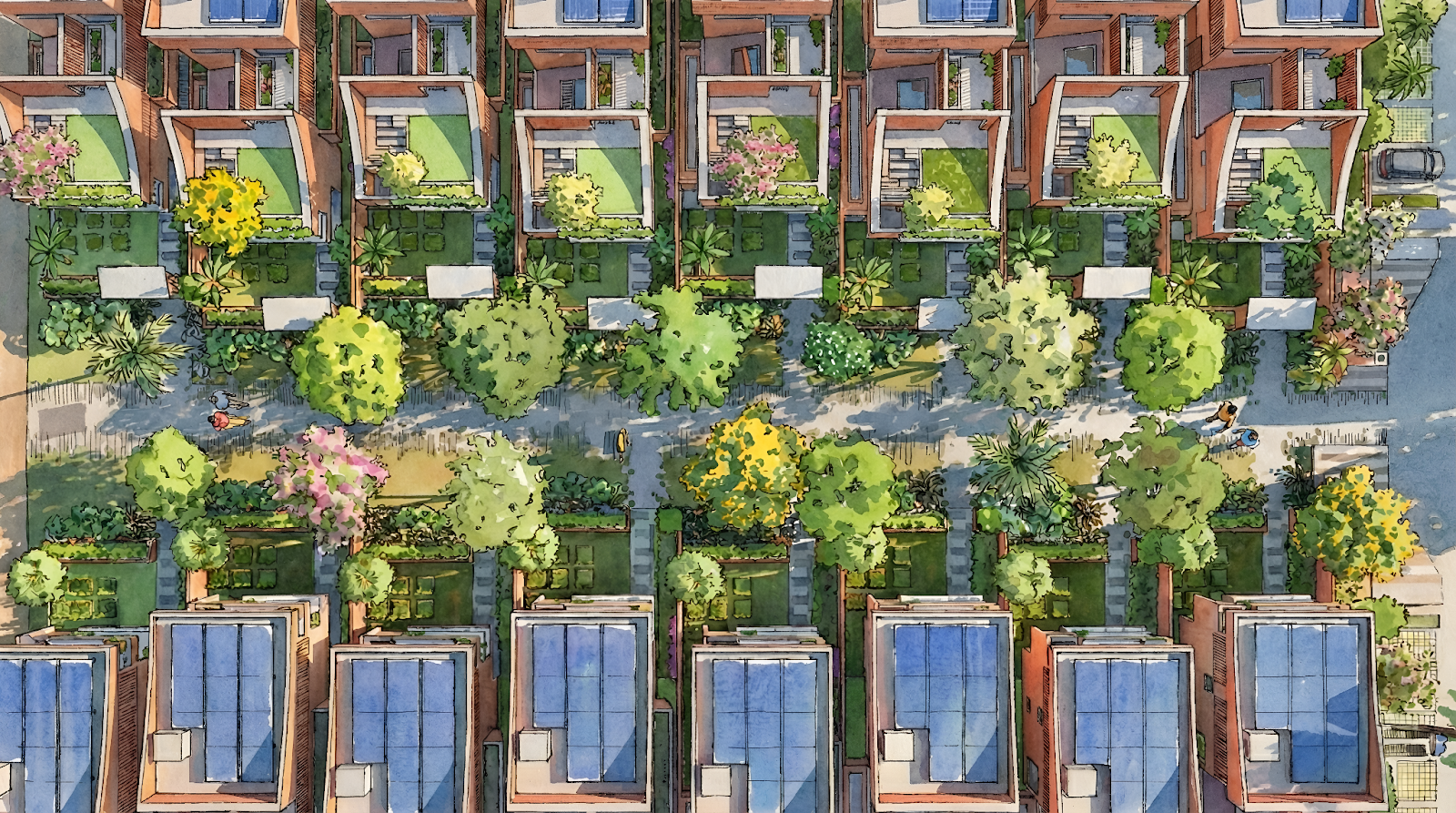
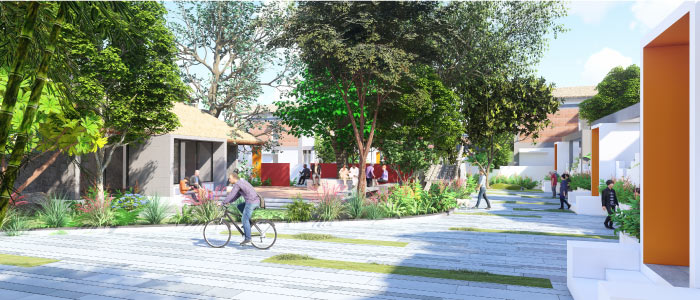
This is not about recreating a whole town. It is about something far more subtle and meaningful: evoking familiarity through small spatial motifs, rhythms, and cues that trigger memory without replication. The public street at Organo Palgutta will be our canvas for this exploration—a contemporary rurban street that carries the warmth, humility, and human scale of South Indian small towns.
The Intent: A Street That Remembers
Our design ambition for this street is to create a place that feels emotionally anchored—where residents and visitors experience gentle nostalgia, even unconsciously. It should feel like part of a living settlement, not a designed artefact. That means designing for rhythm rather than symmetry, softness rather than spectacle, and everyday life rather than monumental gestures.
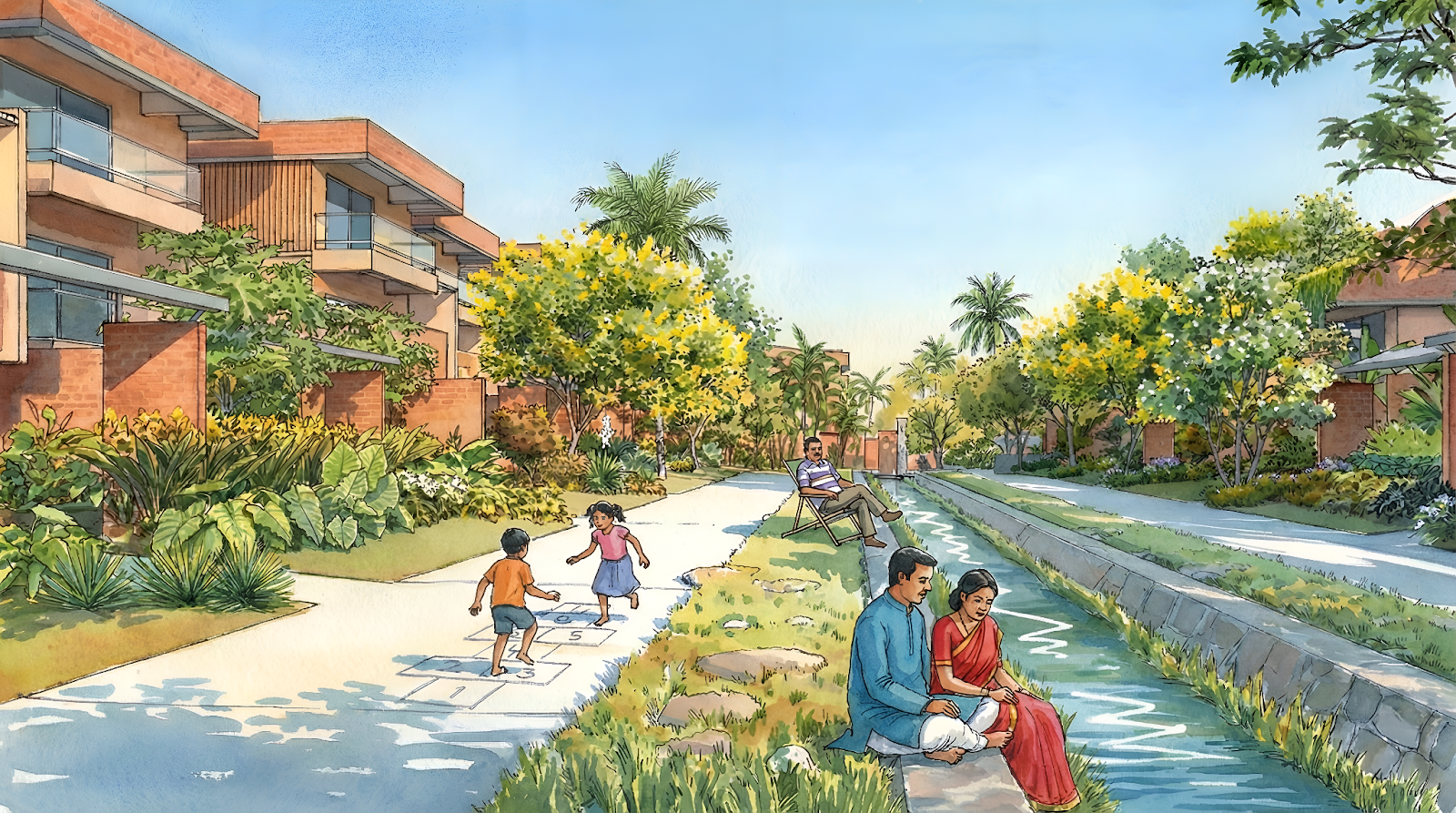
Just like a small-town main road, the street must invite people to walk, pause, sit, gather, and watch. It should feel safe, shaded, familiar, and layered. Most importantly, it must offer multiple “memory triggers”—architectural and cultural elements that remind people of their childhood towns without being literal copies.
Below are ten such “moments of space” we are exploring for Organo Palgutta’s public street—each one a possible anchor for nostalgia, interpreted through the lens of contemporary rurban living.
Ten Nostalgic Moments for Organo Palgutta’s Street
1. A Temple Tree Node
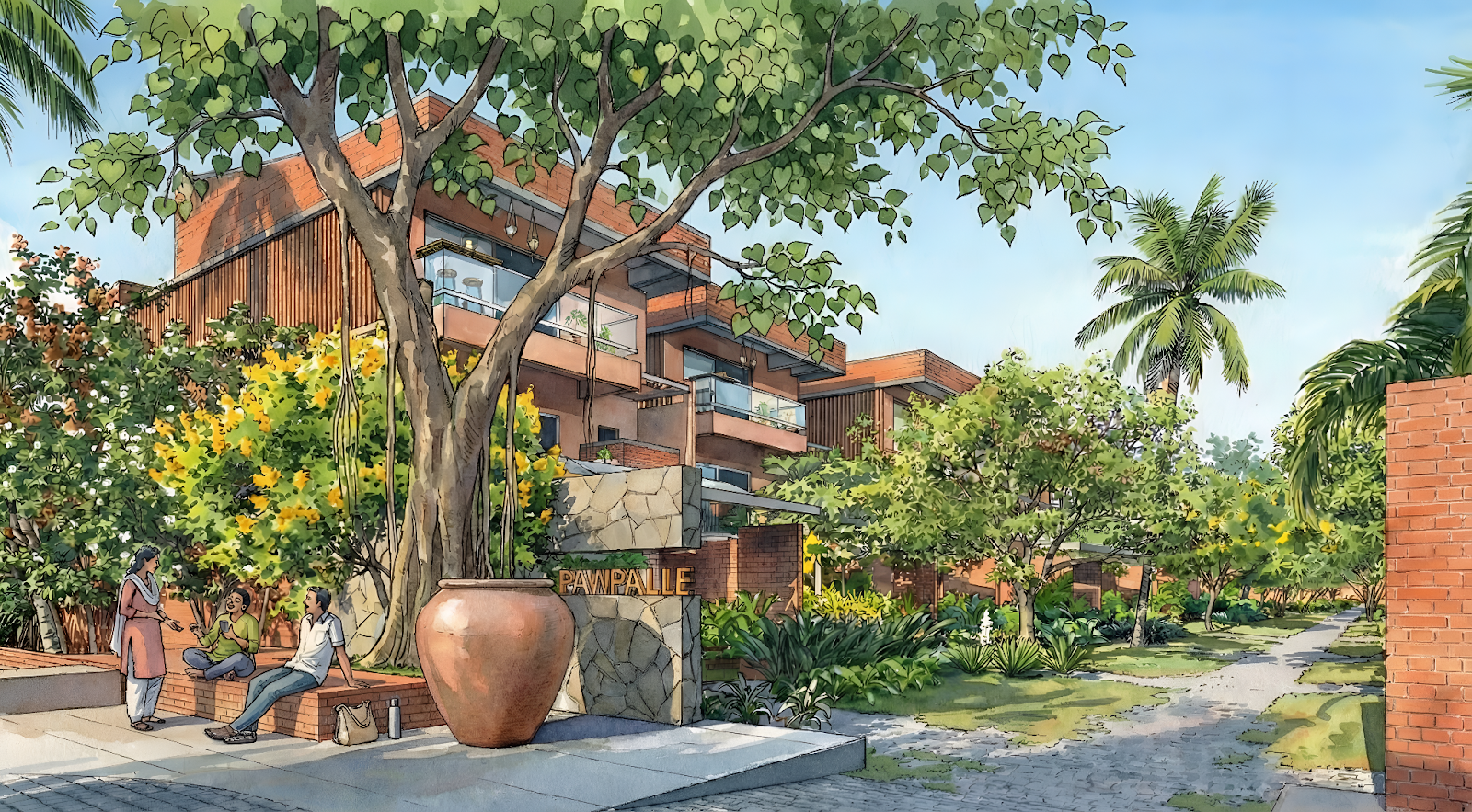
In most small towns, a peepal or banyan tree becomes a social landmark. We imagine a shaded node with a plinth, possibly with a subtle shrine or symbolic element interpreted in a minimal contemporary language. It becomes a morning-walk stop, a space for evening conversations, a familiar pause.
2. Verandahs, Plinths & Sitting Edges
The small-town street edge is never flat. Homes and shops spill slightly outward—plinths, steps, recessed verandahs, oxide benches. These human-scaled edges allow people to sit, chat, wait, or simply lean. At Palgutta, these can be reinterpreted as shaded edges along community buildings or mixed-use fronts.
3. A Tea Stall or Tiffin Corner
Few things evoke belonging as strongly as a tea stall. The sound of steel tumblers, the scent of bajjis, and the casual community that forms around such spaces. A curated kiosk—owned by a local vendor—can recreate this social warmth without kitsch.
4. A Symbolic Water Tank or Well Motif
Small-town skylines are often punctuated by water tanks or old wells. We don’t need a functional tank—but a sculptural reinterpretation or a raised cylindrical form can serve as a nostalgic landmark along the street.
5. Painted Walls & Handcrafted Signage
Cinema posters, wall murals, hand-painted shop signs, festival announcements—these are the visual signatures of South Indian towns. At Palgutta, we can introduce curated walls designed for seasonal murals, artwork, or local announcements—keeping the street visually alive.
6. Cycle Repair or Barber Corner Reimagined
These shops represent loyalty and neighborhood familiarity. A micro-kiosk—symbolic, small, functional—could recreate this feeling, offering a service like cycle repair or grooming in a humble, nostalgic format.
7. A Step-Edge or Ghat-Like Sitting Space
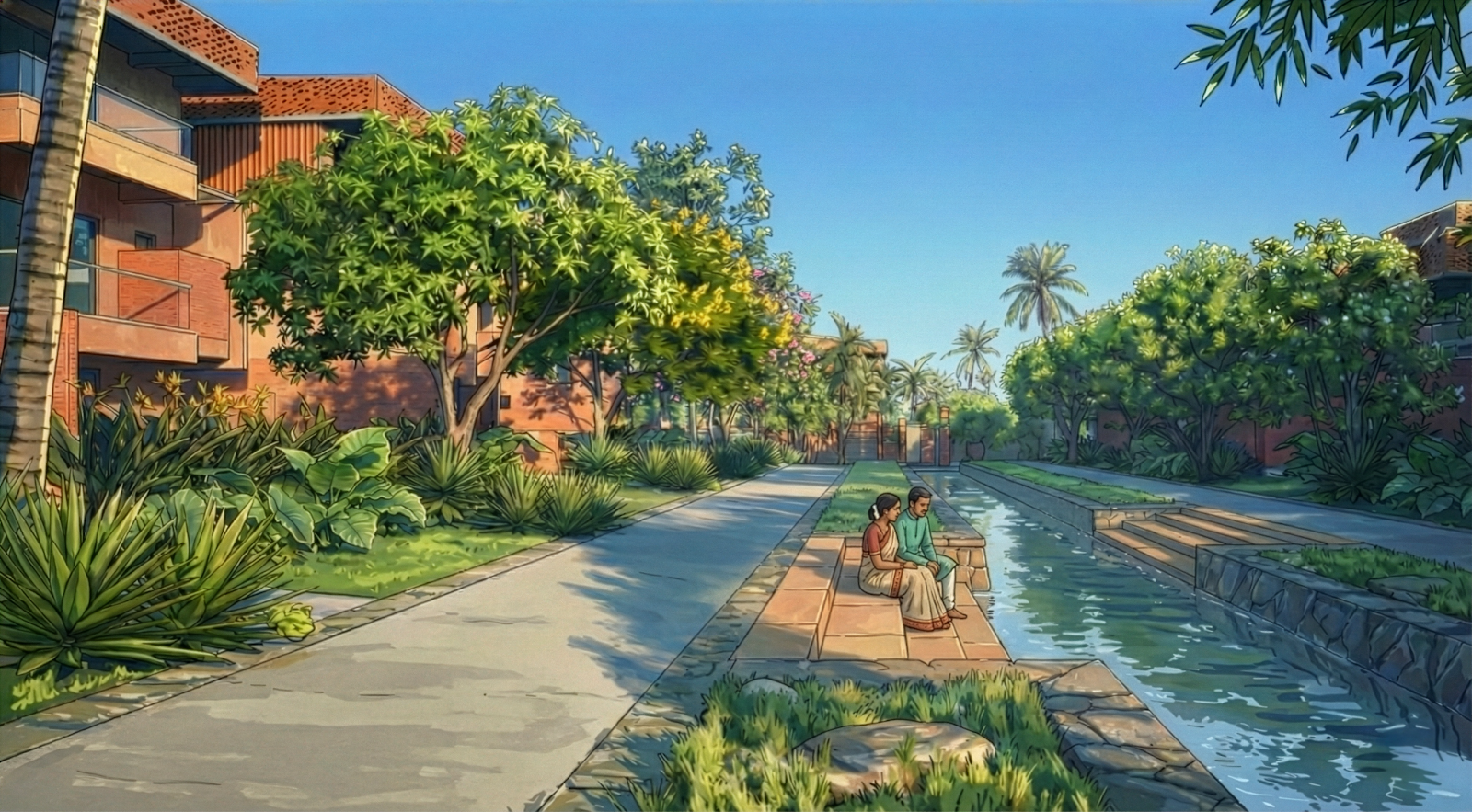
Even towns without rivers have steps—leading to tanks, gardens, or elevated platforms. Steps naturally create pause points. In Palgutta, a stepped plaza or seating edge can recreate the same informal social life.
8. Festival Spine & Procession-Friendly Street Width
Small towns transform during festivals—Bonalu, Dussehra, Ganesh Chaturthi. The street at Palgutta can be proportioned and equipped with hooks, niches, or lighting systems that allow festive decor and cultural gatherings. This embeds cultural memory into the very geometry of the space.
9. The Cinema Wall or Community Notice Board
A blank wall dedicated to posters, announcements, and community events can be timeless. It becomes a memory trigger for those who remember visiting small-town theatres or reading public notices plastered on walls.
Not Replication—But Resonance
The design of Organo Palgutta’s street is not about mimicry. We are not building a Warangal street in 2025. Instead, we are asking:
What made those streets feel loved, lived-in, and human?
What spatial cues made them unforgettable?
How can we honour those memories without freezing them in time?
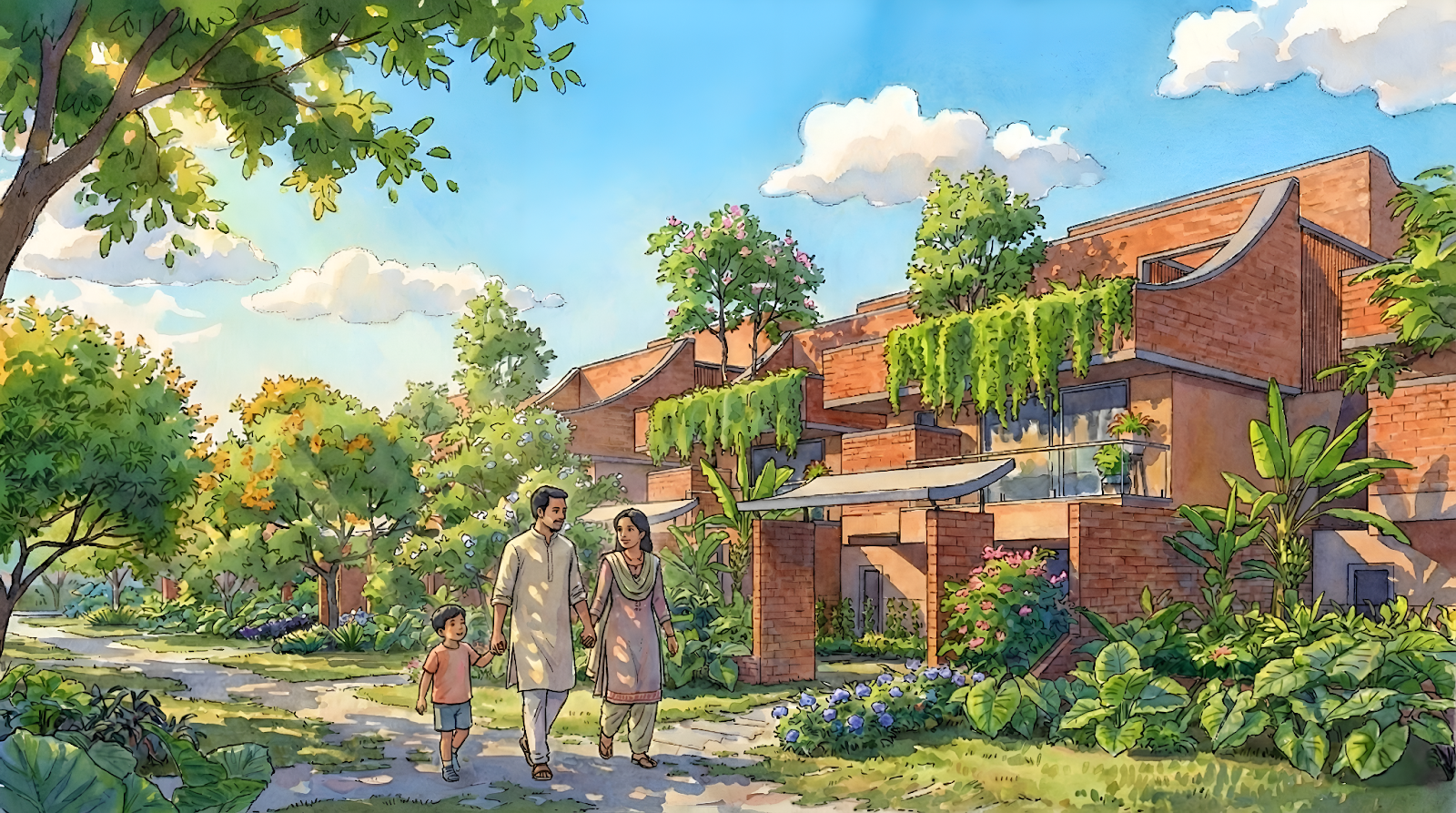
Each motif will be interpreted through our rurban design grammar—natural materials, ecological performance, comfortable microclimates, and timeless proportions. The result will be a street that feels both new and strangely familiar, modern yet rooted, functional yet full of soul.
At Organo Palgutta, we are crafting not just infrastructure but emotionally intelligent spaces—streets that whisper stories, invite belonging, and awaken childhood memories in gentle, unexpected ways.
This is the beginning of that exploration.
Related blogs


%2520(1).jpeg)
.png)