.svg)
.avif)
Designing with the Wind: How Air Flow Shapes Comfortable Living at Organo Antharam
INTRODUCTION
Hyderabad is 88.6% comfortable throughout the year. However, the discomfort hours are spread across the whole year, mainly during the morning hours. Night time temperatures are comfortable through most of the year except Mid-March to Mid-June.
Natural ventilation analysis
Wind contributes significantly towards urban climate and creates a micro-climate in the community. Two natural forces can be used to drive air through a building: Wind and buoyancy, which lead, respectively, to two main natural ventilation strategies: Cross ventilation and stack ventilation.
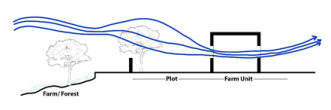
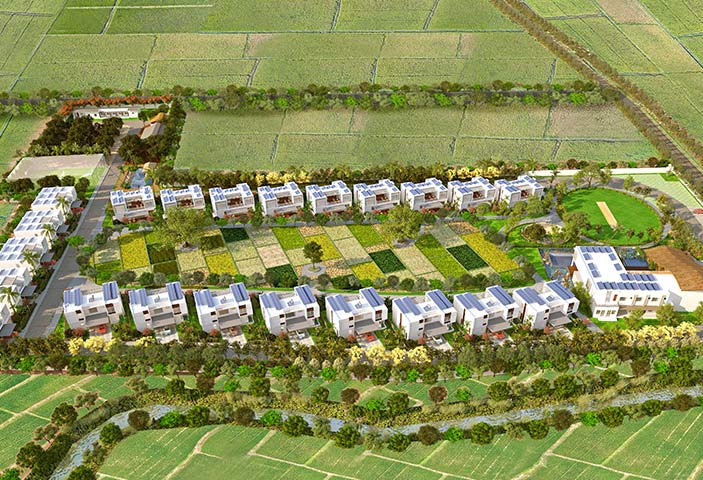
A typical urban layout has buildings with different heights creating harsh elements that affect the near and far-field wind of low velocity. Planning of a space has a significant effect on the wind flow velocity patterns and thus natural ventilation. At Organo Antharam, we adopted a cross-ventilation strategy by staggering the farm units to let the free airflow movement to create pressure difference (high to low
pressure).
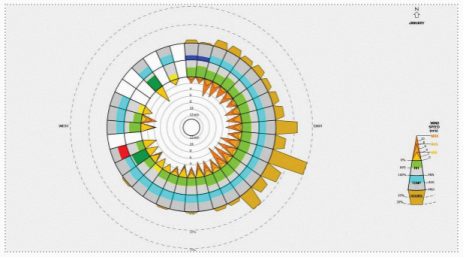
Wind flow analysis was performed by simulation of the scenarios to optimize the space planning. The strategy adopted was a combination of the following:
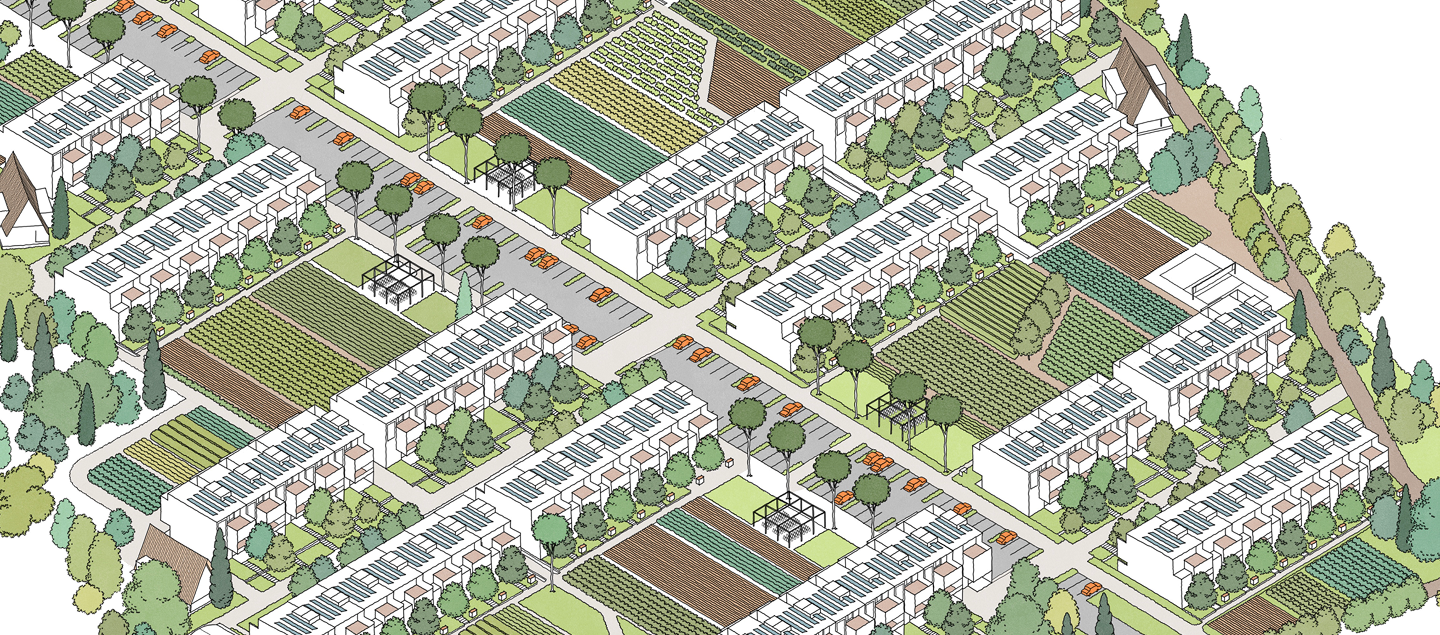
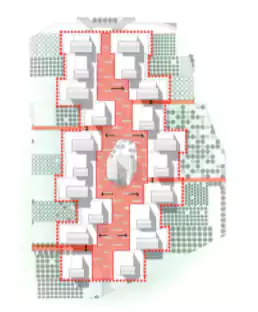
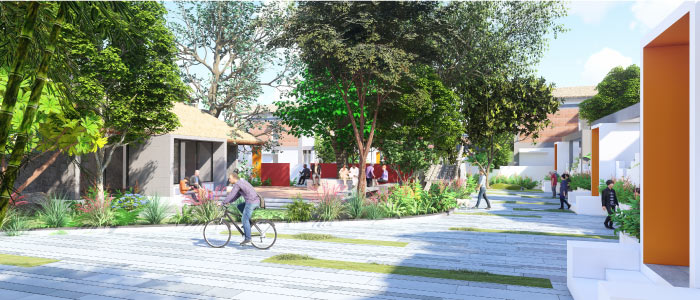
(A). Staggering the farm units front and back to avoid single alignment. The design follows the bottom down approach of a village formation prototype
(B). 3m pathways through the clusters working as jogging tracks and acting as a space to let more wind flow by creating wind tunnels.
As seen in the typical cluster designed before, the farm units were close to each other. The alignment was blocking most of the airflow movement without creating a pressure difference. Hence the farm units were moved to generate spaces between creating convective heat transfer (natural ventilation) in the farm unit outdoors and indoors.
Climate – Irradiation
Due to rapid urbanization and growth in infrastructure, the zone absorbs more heat. This results in keeping the area warmer. This phenomenon is referred to as Urban Heat Island. At Organo Antharam adaptive measures for Urban Heat Islands adopted are-
(A). Pavement: The design has targets to reduce the road spaces. The 12m wide BT road runs only to connect the clusters in two parts (a) North-south road (b) East-west road. The roads in the clusters are stone cladding with landscape on either side of the road. The road is 3.5m wide, lined with tall trees providing shading throughout
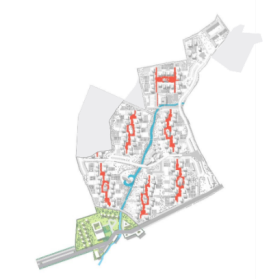

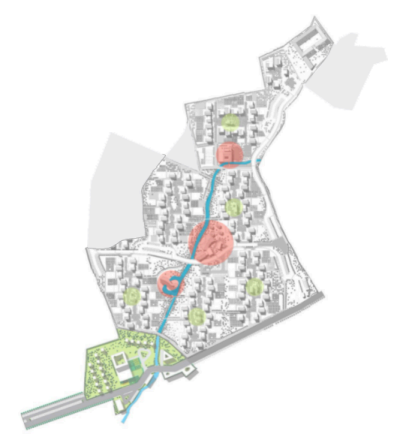
(B). Passive systems to improve air quality and reduce heat retention in the microenvironment . Roof areas account for about 21-25% of the total coverage in the urban area (Heat Island group, Berkeley National Laboratory). At Organo Antharam, there are 7-8 acres of forest cover; this creates a microclimate that is cooler compared to any urban space. Maximizing shaded pathways, enhancing wind flow at pedestrian levels, and maximizing tree cover will ensure PET conditions are within the comfortable range through most of the year.
(B). Work Environment and health care. UHI and heatwaves cause damage to healthcare. According to WHO, it has become a source of environmental risk and is considered morbidity and mortality. With these global concerns about how climate change and weather variability affect human health, the following adaptive measures are considered in the Organo Antharam:
(C). All the common amenities are placed along the Nala, surrounded by dense forest area. The cluster club also plays a crucial role in each cluster, making it easy access to all. The areas create a microclimate keeping the spaces cooler and creates a perfect environment for one to spend time with family or work from home.
It is important to note that wind is one of the most complex systems to model and simulate as it’s very dynamic and varies based on temperature, pressure, humidity, surrounding landscape, any breaks such as trees. Therefore, what this modelling tells us is whether on an overall design level, we are going in the right direction or not.
Related blogs


%2520(1).jpeg)
.png)