.svg)
.avif)
From Backyard Forests to Shared Harvests
From Backyard Forests to Shared Harvests
How the landscape at Ibrahimpalle was designed to feed you
At Organo Ibrahimpalle, the design process didn’t start with drawings. It began with an understanding of the land. Before we marked out roads or plotted homes, we spent time walking the site, observing the soil, the way wind moved through it, the signs of water, and where birdlife gathered. These observations shaped our intent: to build a place that nourishes, not just through shelter, but through food, landscape, and rhythm.
Here, the environment is not passive. It participates.
Edible by Design
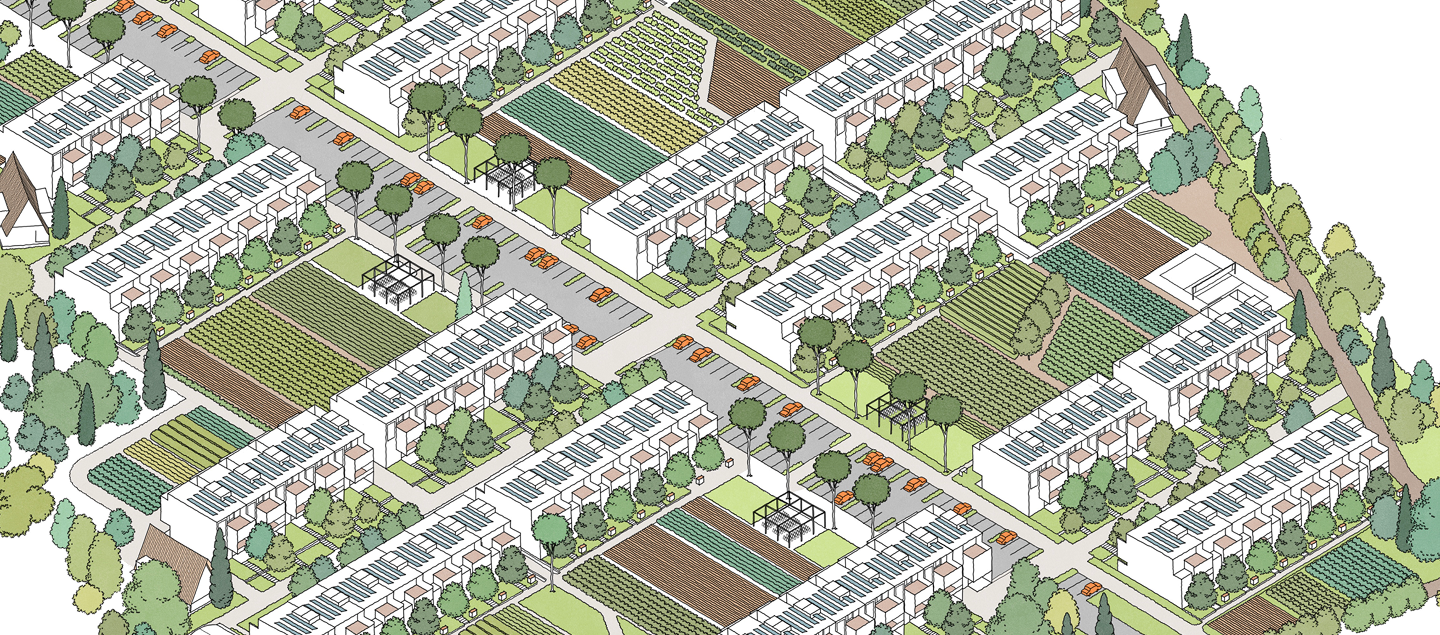
Across Ibrahimpalle’s 50 acres, over 22 acres have been dedicated to food forests, and gardens. These are not ornamental spaces. They’re functional. Designed to reduce the distance between people and what they eat. Every cluster, every villa, every street has some role in this edible landscape.
You’ll find moringa trees lining avenues, basil and curry leaf within arm’s reach, and flowering herbs that invite butterflies to your window garden. It’s a system we refer to as “edible ecology”, where nature, design, and food are woven together.
Backyard Forests
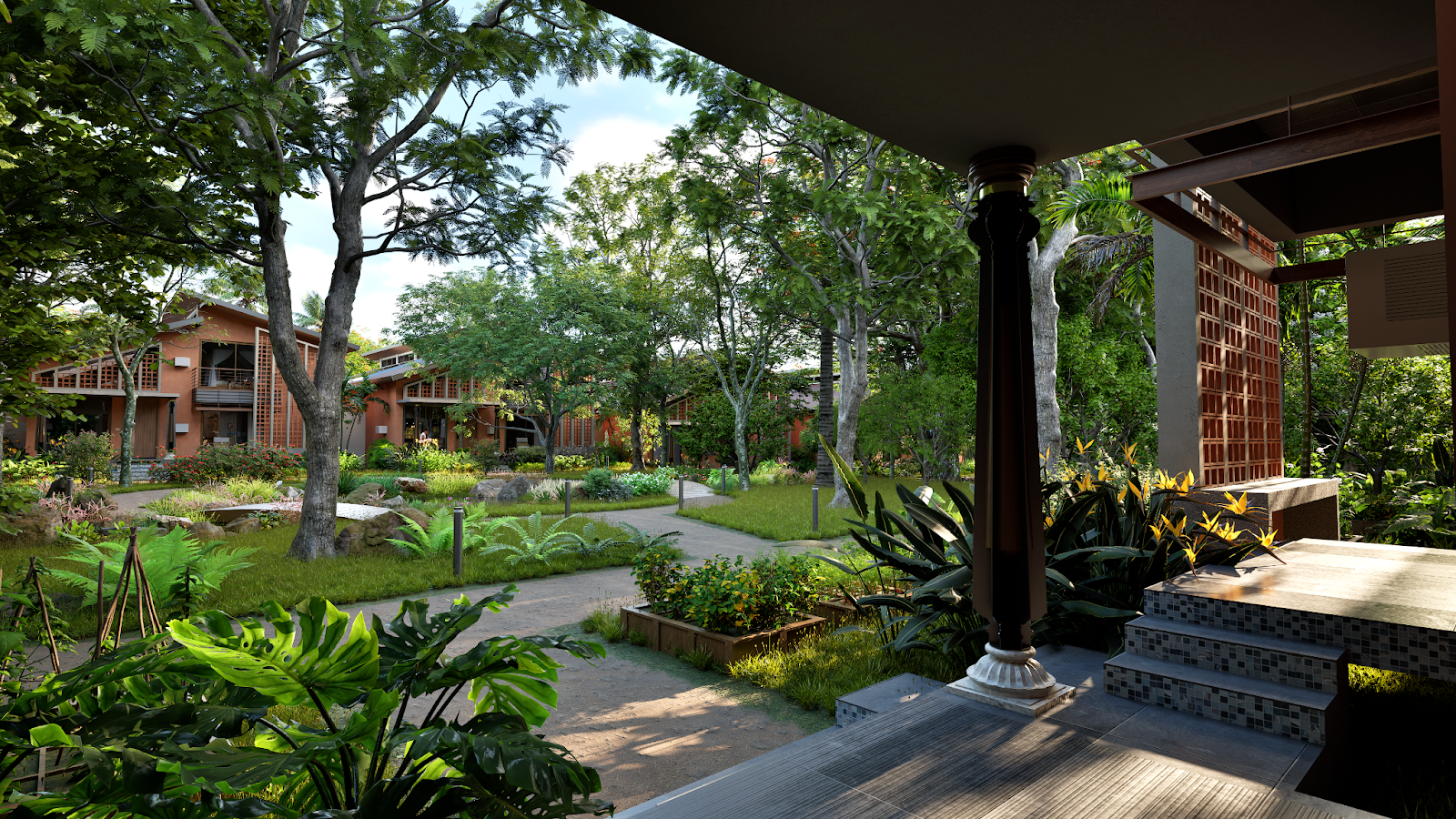
Behind each cluster of homes lies a forest, not a wild patch, but a curated space inspired by forest guilds. These forests use a mix of fruit trees, nitrogen-fixers, pollinators, and ground cover. Guava may grow with lemongrass and pigeon pea. Jamun with turmeric, vetiver, and beans. These combinations mimic natural systems and support biodiversity, while also yielding food.
They require little maintenance, improve the soil naturally, and create shaded microclimates. For residents, they are both ecological buffers and gentle reminders that the forest can be part of daily life, not just a backdrop.
Square-Foot Kitchen Gardens
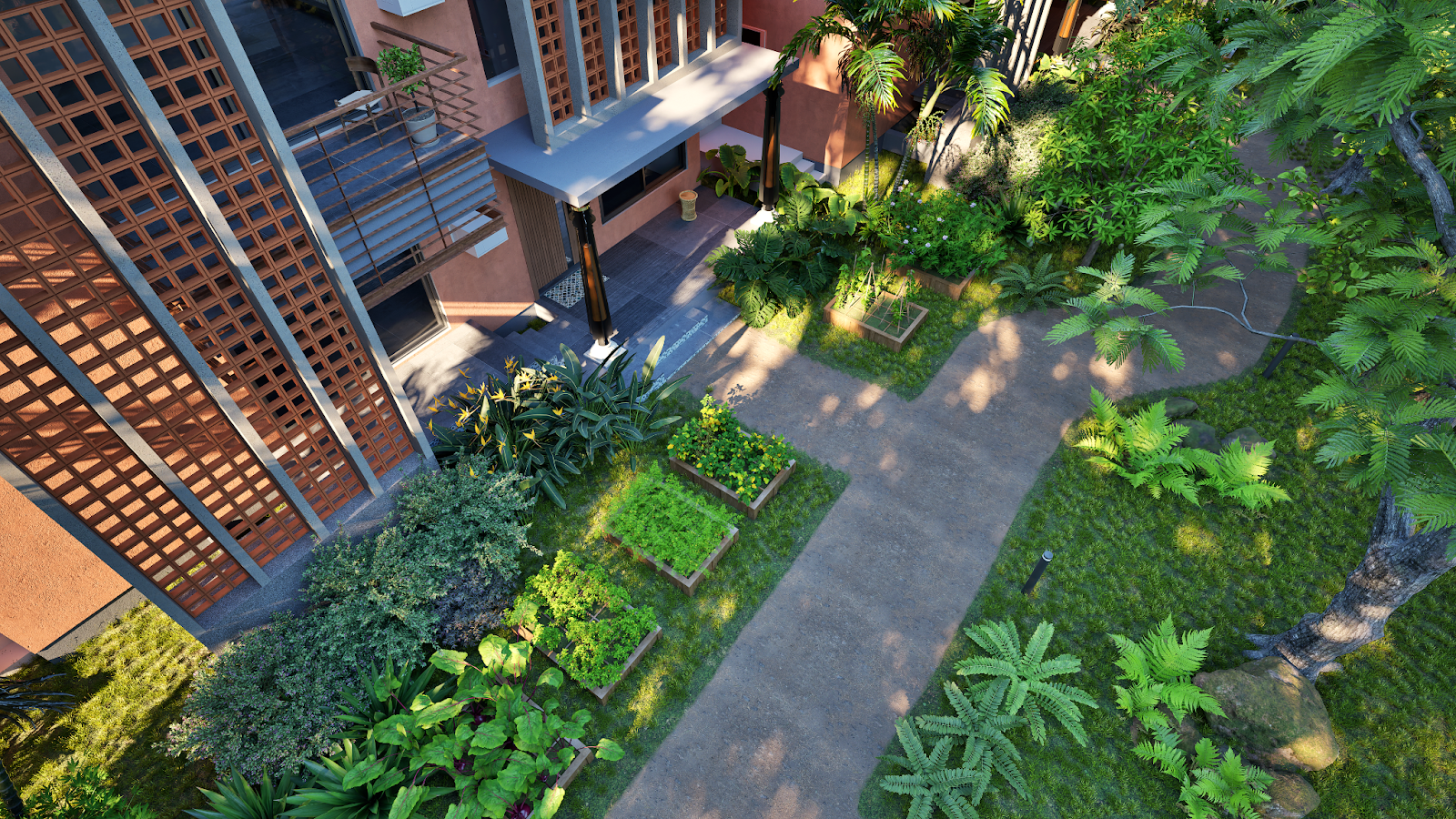
Each home comes with a small kitchen garden based on the square-foot model. It’s practical, compact, and productive, suited for households who want to grow their own herbs and vegetables. Raised beds, planned grids, and seasonal planting make it easy for first-time gardeners.
What you grow could be ridge gourd or tomatoes, chillies or tulsi. It’s not the scale that matters, it’s the habit; of planting, watering, harvesting. These acts bring a sense of rhythm to daily life, a quiet return to the idea that food begins with soil, not plastic packaging.
Shared Farming and Community Spaces
Beyond private spaces, Ibrahimpalle includes community farms and orchards. These areas are professionally maintained, but open to participation. Residents can walk through, join seasonal harvests, or simply observe the shift in crops over time.
Composting stations are accessible to all. Produce boxes are available weekly for purchase at the Organo Farm Store. At times, shared feasts are hosted to mark the harvest. These communal activities aren’t formal programs. They’re invitations. To slow down. To connect. To contribute.
The farming here follows natural practices, no chemical inputs, no pesticides. Techniques like mulching, intercropping, and crop rotation are used to support the soil and the plants. It’s a quiet form of stewardship that invites learning rather than demand expertise.

A Landscape That Encourages Care
More than the food grown, what defines the landscape is the culture it fosters.
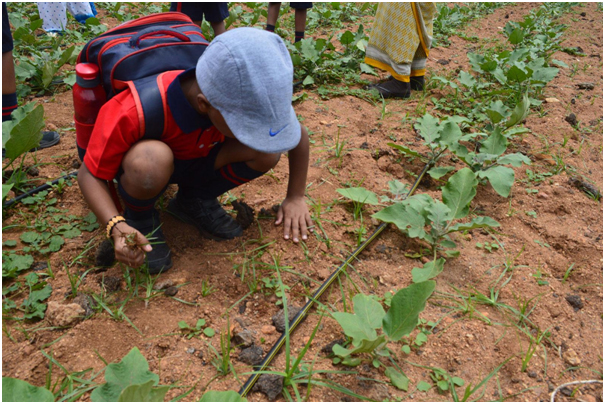
Fruit trees are placed where people walk, sit, and talk. Curry leaf becomes part of your daily cooking. Tulsi is something a child helps water before school. The landscape is designed not to be admired but to be used.
By placing edible, medicinal, or fragrant plants along movement corridors and gathering spaces, the master plan encourages interaction. Lemon grass by windows. Spinach along the fence. The idea is to bring nature into hand’s reach, not just line it along the periphery.
Even the soil is left visible and knowable. A gardener isn’t needed to tell you what thrives, observation and a bit of trial are enough.
It’s a Lifestyle, Not Just a Feature
At Ibrahimpalle, a villa is not a standalone unit. It’s part of a larger ecological and social system. Where the ground does more than support structures: it grows food, supports insects, absorbs rain, and slows you down.
The landscape doesn’t ask for perfection. It asks for attention.
And in return, it offers the opportunity to participate in a way of life that values care, cultivation, and shared resources.
We didn’t design this community around a clubhouse. We designed it around land that could support life. That grows with its residents.
And for those who live here, that’s the real luxury.



.jpeg)