.svg)
.avif)
Know your Carbon Footprint: Understanding Our Impact and How can we Reduce It
What is Carbon Footprint?
To define carbon footprint “It is the total amount of greenhouse gases caused by an individual, event, organization, service, place or product during a given period. Greenhouse gases, including the carbon-containing gases carbon dioxide and methane, can be emitted through the burning of fossil fuels, land clearance and the production and consumption of food, manufactured goods, materials, wood, roads, buildings, transportation and other services. ”
In 2005, the idea of a personal carbon footprint was popularized by an successful advertising campaign and it led to rise in consumers’ concern about their own personal actions that cause carbon emissions.
Why is it important to keep it small?

From the early days of industrial revolution to the present day, humanity has heavily relied on fossil fuels, energy usage, and constant deforestation to meet their needs which led to the growth of greenhouse gasses in the atmosphere. If we do not reduce our carbon footprint, it causes devastating effects on the environment. It leads to increase in temperature, rising sea levels, melting of sea ice, precipitation, acidification and warming of oceans.
The average carbon footprint for every person in the US is 16 tons which is four times higher than the average of the world i.e. 4 tons. It should be reduced to 2 tons per person by 2050 to control the growth of temperature by 2 Celsius.
Even though Indian per capita carbon footprint(1.86 tonnes ) is lower than the world average, studies show that co2 emission by Indian urban households is 16 times more than rural ones. Looking at the rapid pace of urbanization in India, it is inevitable that carbon emissions will increase in coming years. UN Habitat has estimated that cities are responsible for emitting up to 70% of harmful greenhouse gases while occupying just 2% of the global land. To reduce our emissions, it is important to reduce the growth of urbanization and counter urbanise back to villages.
As the planet’s future depends on our collective carbon footprint, it is essential to reduce it by our conscious choices.

How is it calculated?
An individual’s, nation’s, or organization’s carbon footprint can be measured by undertaking a GHG emissions assessment, a life cycle assessment, or other calculative activities denoted as carbon accounting.
There are several online tools which give a reasonably accurate number of your individual carbon footprint by asking you to answer more or less detailed questions about your diet, transportation choices, home size, shopping and recreational activities, usage of electricity, heating, and heavy appliances such as dryers and refrigerators, and so on. Here are a few links
1. https://www.carbonindependent.org/
2. https://www.indiaghgp.org/calculation-tools
3. https://e-amrit.niti.gov.in/co2-calculator
5. https://www.carbonfootprint.com/ calculator.aspx
What are the various footprints?
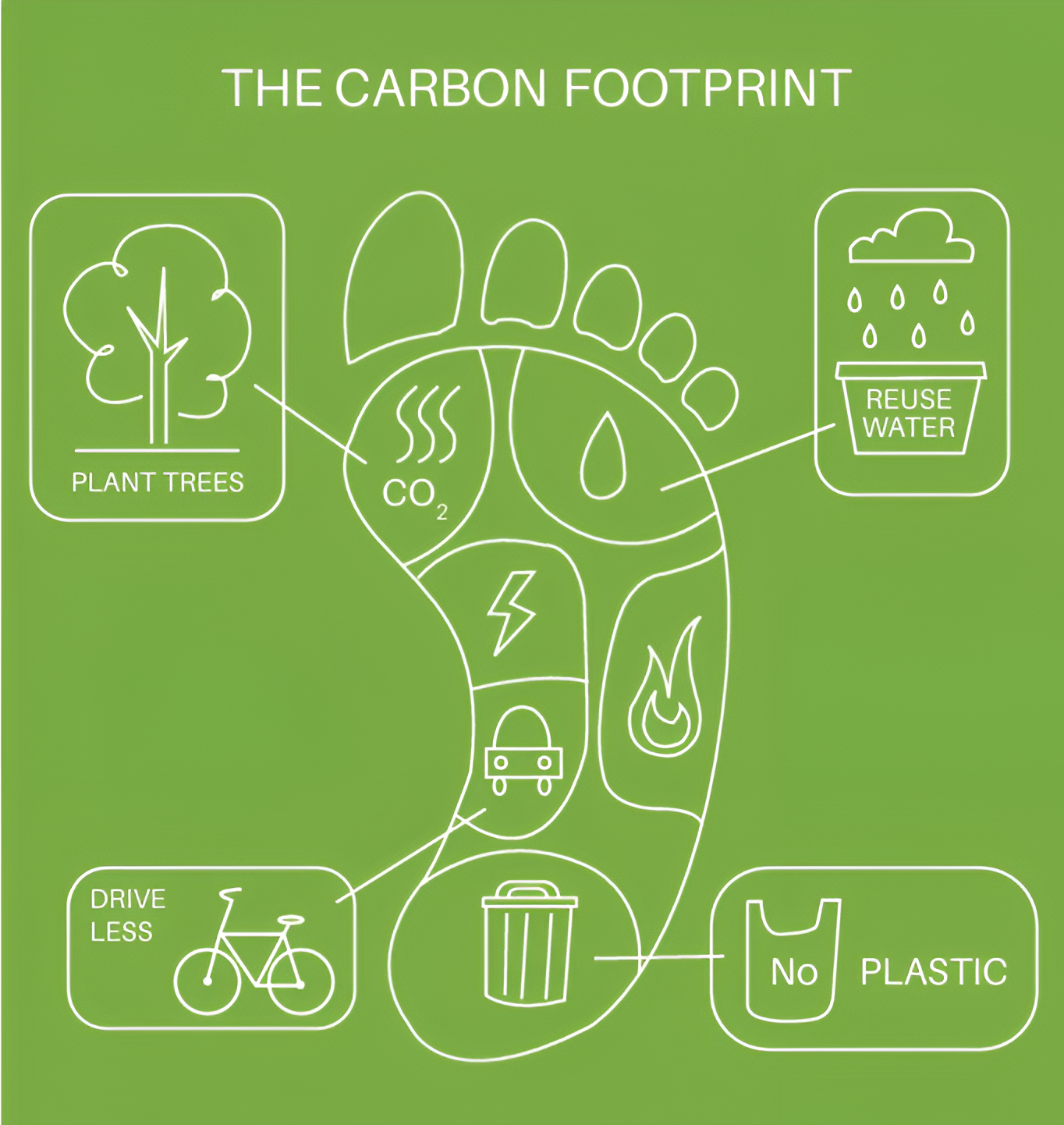
Carbon footprint is one of a family of footprint indicators, which also include ecological footprints, water footprints and land footprints. As we have seen what carbon footprint means, let’s take a look at what other footprints are.
• Ecological footprint is a method used to measure human demand on natural capital, i.e. the quantity of nature it takes to support people or an economy.
• Water footprint measures the amount of water used to produce each of the goods and services we use.
• Land footprint is the real amount of land that is needed to produce a product, or used by an organisation or by a nation. All these footprints are used to measure the effects of human actions on natural resources and guide us in taking responsible decisions in life.
5 ways to reduce your carbon footprint
1. Follow the 5R: Refuse, Reduce, Reuse, Rot, Recycle
a. Refuse use of plastic
b. Reduce your consumption
c. Reuse your old and good products
d. Rot your food scraps
e. Recycle plastic, paper, glass or anything that comes into your life
2. Walk or use bicycles for short travel and prefer public transport for long travel
3. Buy food from local farmers to reduce your food miles
4. Transition to clean energy consumption
5. Eat plant-based food and reduce meat consumption
Through these easy steps to reduce carbon footprints, our collective carbon footprint can be reduced to 2 tons per person by 2050.
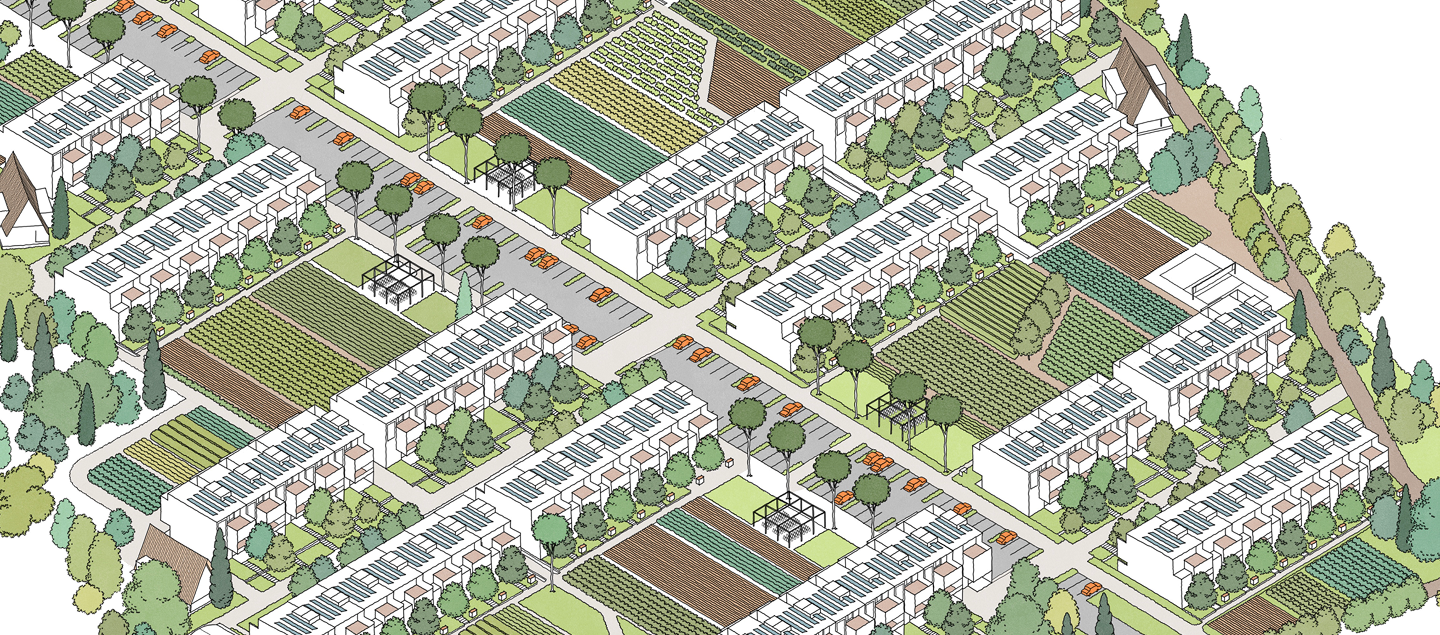
Lowering Carbon Footprint is easier in Organo’s Eco Habitats

At Organo Eco Habitats, the Sapthapatha (Seven strands of sustainability ) makes it easy to reduce your carbon footprint by
1. Moving from consumer community to prosumer (produce, then consume) community
2. Generating solar energy to meet your electricity needs
3. Harvesting rainwater and recycling waste water to use for farming and afforestations
4. Growing local, safe and witnessed food in the collective farm, thereby reducing your food miles
5. Composting kitchen waste/scraps and utilizing it as a natural nutrient for farming
6. Sharing of collective resources and facilities, thereby optimising land use, materials, and social amenities
7. Making the community pedestrian friendly and encouraging cycling
There are many other ways you can reduce carbon emissions within eco-communities and we always encourage innovative ways to lead an eco-friendly life, thereby lowering our footprints.




.jpeg)