.svg)
.avif)
Organo Palgutta: Designed for OwnTown Living
Author: Meena Murugappan, Director (Product Strategy & Innovation)
Small towns in South India—Warangal, Vijayawada, Rajahmundry, Nellore, Ongole—hold a rare kind of emotional gravity. For many of us, they are the backdrop of our earliest memories: walking to school past temple gopurams, buying hot bajjis from the street-side cart, waiting at the cycle repair shop while our punctured tyres were being mended, sitting on plinths shaded by neem trees, and watching festivals transform ordinary lanes into vibrant living theatres.
At Organo Palgutta, we are working with a question that goes beyond design:
:How can a street make you feel like you’ve come home—even if you’ve never lived there before?
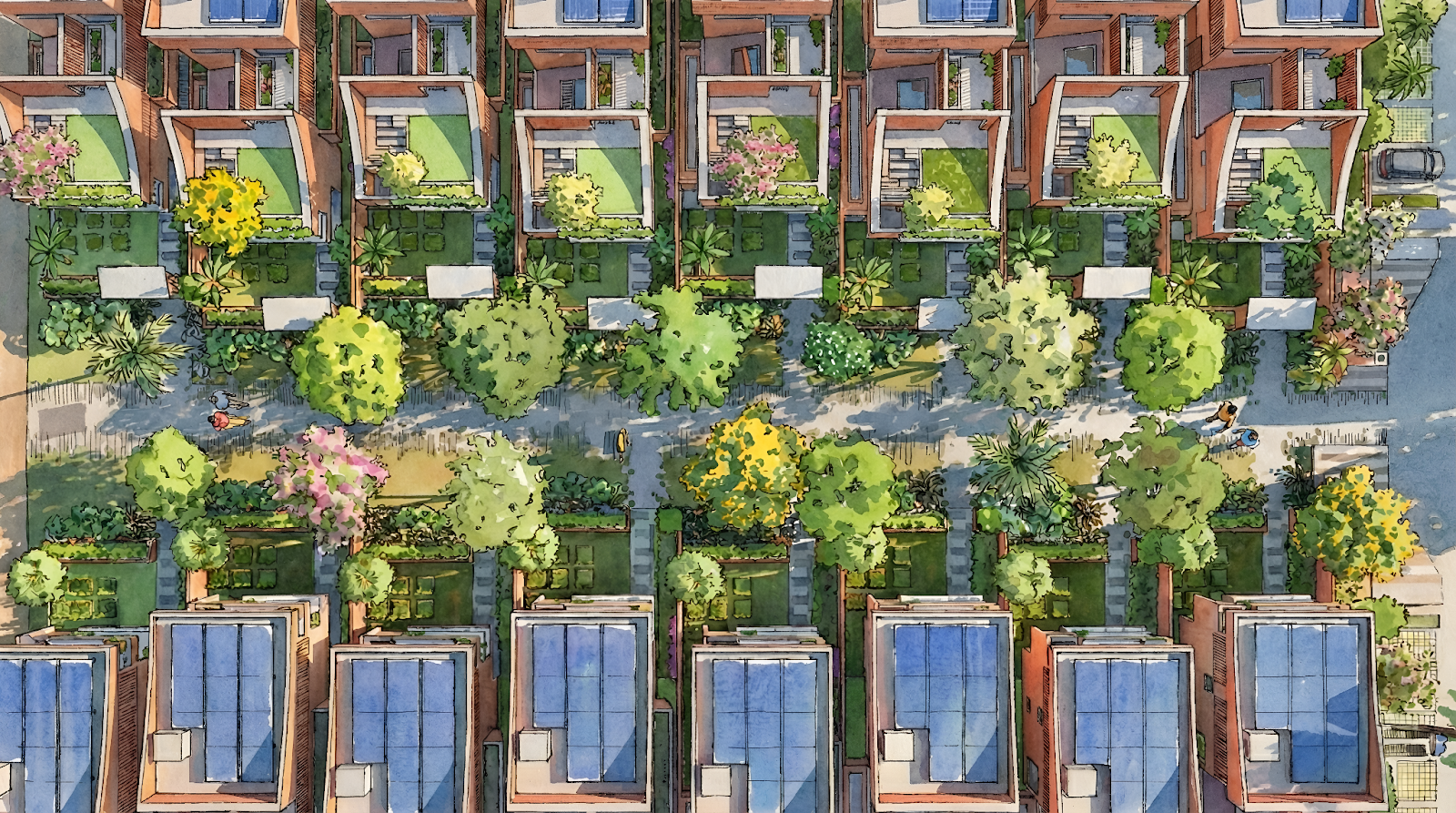
This is not about recreating a whole town. It is about something far more subtle and meaningful: evoking familiarity through small spatial motifs, rhythms, and cues that trigger memory without replication. The public street at Organo Palgutta will be our canvas for this exploration—a contemporary rurban street that carries the warmth, humility, and human scale of South Indian small towns.
The Intent: A Street That Remembers
Our design ambition for this street is to create a place that feels emotionally anchored—where residents and visitors experience gentle nostalgia, even unconsciously. It should feel like part of a living settlement, not a designed artefact. That means designing for rhythm rather than symmetry, softness rather than spectacle, and everyday life rather than monumental gestures.
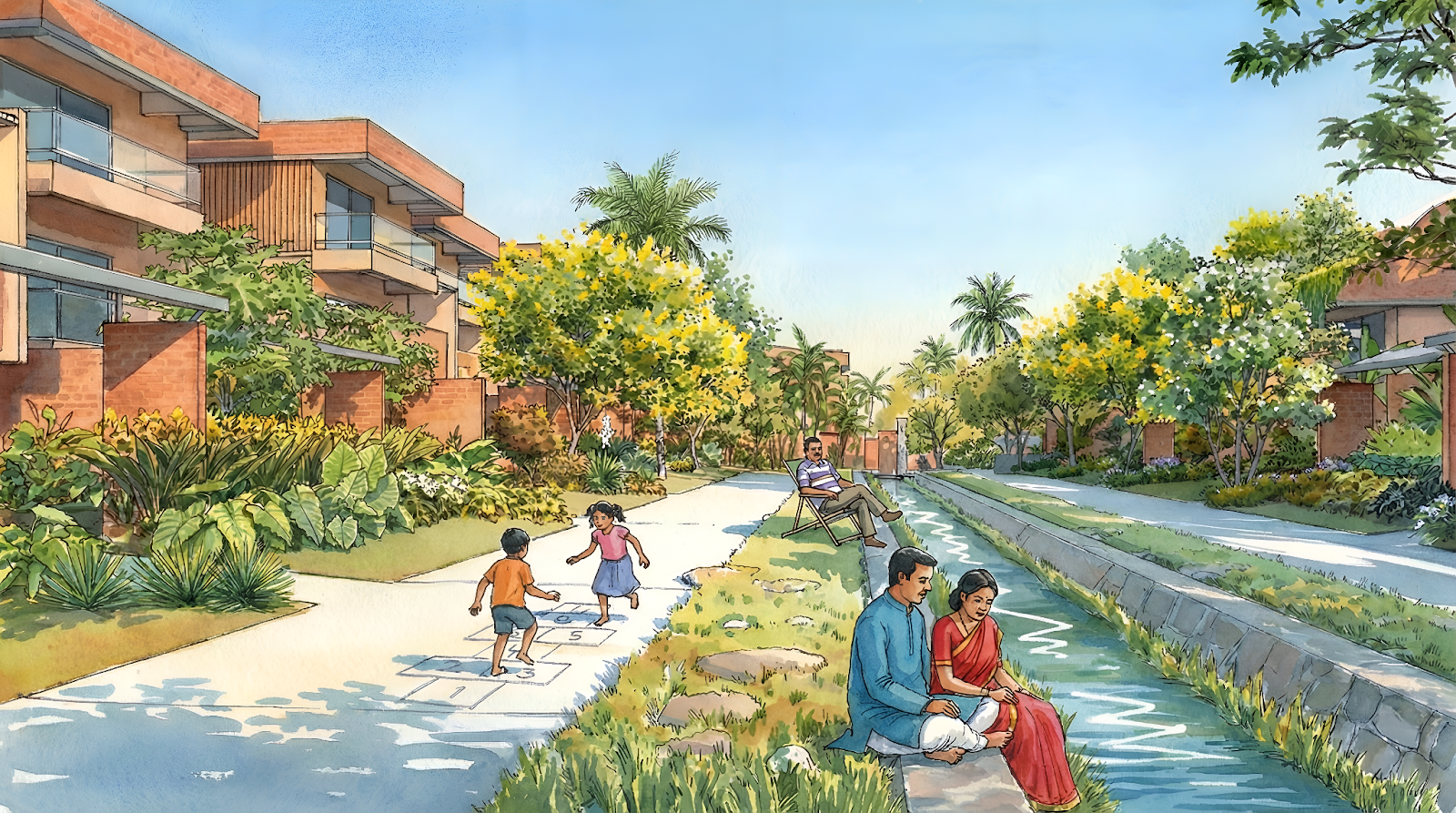
Just like a small-town main road, the street must invite people to walk, pause, sit, gather, and watch. It should feel safe, shaded, familiar, and layered. Most importantly, it must offer multiple “memory triggers”—architectural and cultural elements that remind people of their childhood towns without being literal copies.
Below are ten such “moments of space” we are exploring for Organo Palgutta’s public street—each one a possible anchor for nostalgia, interpreted through the lens of contemporary rurban living.
Ten Nostalgic Moments for Organo Palgutta’s Street
1. A Temple Tree Node
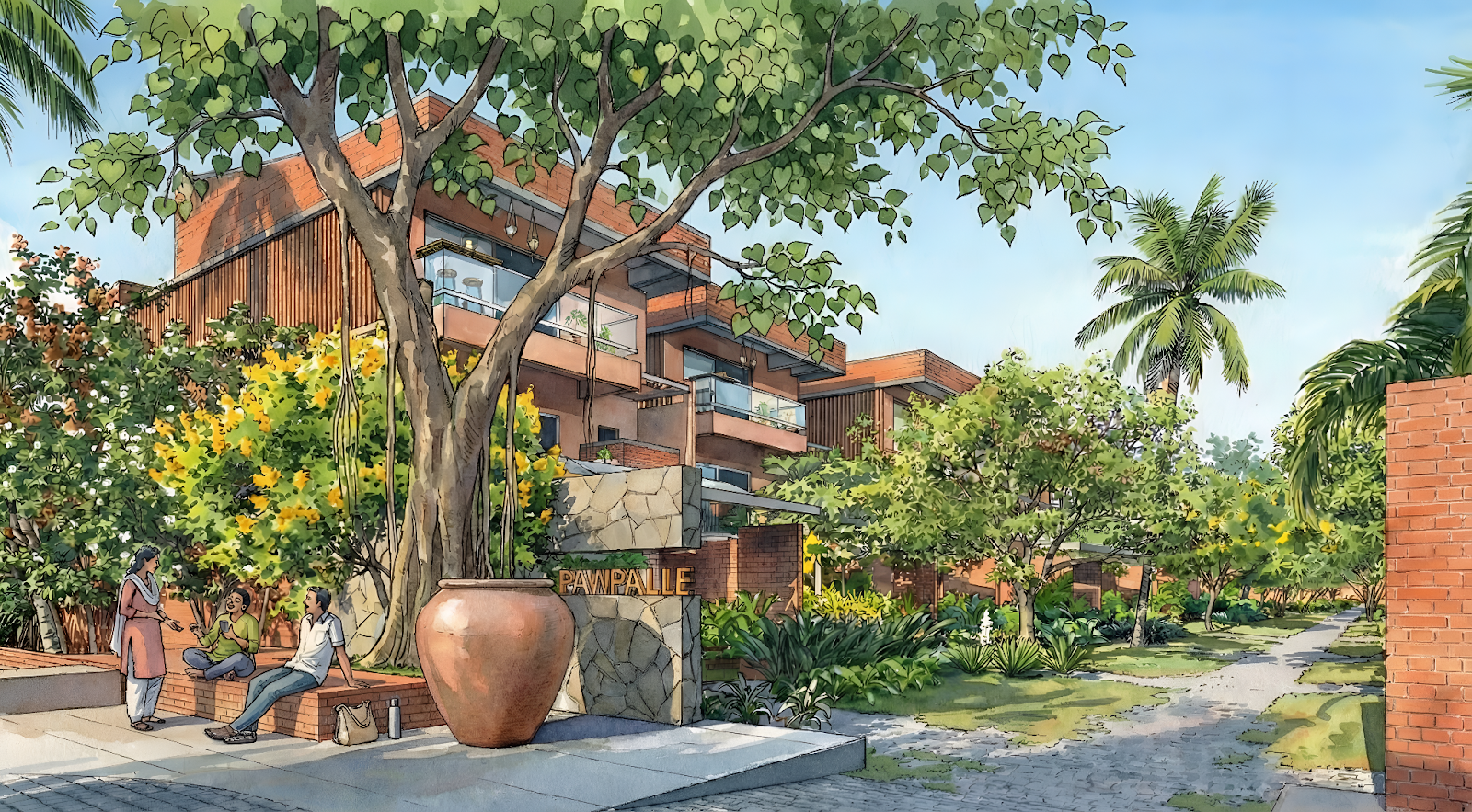
In most small towns, a peepal or banyan tree becomes a social landmark. We imagine a shaded node with a plinth, possibly with a subtle shrine or symbolic element interpreted in a minimal contemporary language. It becomes a morning-walk stop, a space for evening conversations, a familiar pause.
2. Verandahs, Plinths & Sitting Edges
The small-town street edge is never flat. Homes and shops spill slightly outward—plinths, steps, recessed verandahs, oxide benches. These human-scaled edges allow people to sit, chat, wait, or simply lean. At Palgutta, these can be reinterpreted as shaded edges along community buildings or mixed-use fronts.
3. A Tea Stall or Tiffin Corner
Few things evoke belonging as strongly as a tea stall. The sound of steel tumblers, the scent of bajjis, and the casual community that forms around such spaces. A curated kiosk—owned by a local vendor—can recreate this social warmth without kitsch.
4. A Symbolic Water Tank or Well Motif
Small-town skylines are often punctuated by water tanks or old wells. We don’t need a functional tank—but a sculptural reinterpretation or a raised cylindrical form can serve as a nostalgic landmark along the street.
5. Painted Walls & Handcrafted Signage
Cinema posters, wall murals, hand-painted shop signs, festival announcements—these are the visual signatures of South Indian towns. At Palgutta, we can introduce curated walls designed for seasonal murals, artwork, or local announcements—keeping the street visually alive.
6. Cycle Repair or Barber Corner Reimagined
These shops represent loyalty and neighborhood familiarity. A micro-kiosk—symbolic, small, functional—could recreate this feeling, offering a service like cycle repair or grooming in a humble, nostalgic format.
7. A Step-Edge or Ghat-Like Sitting Space
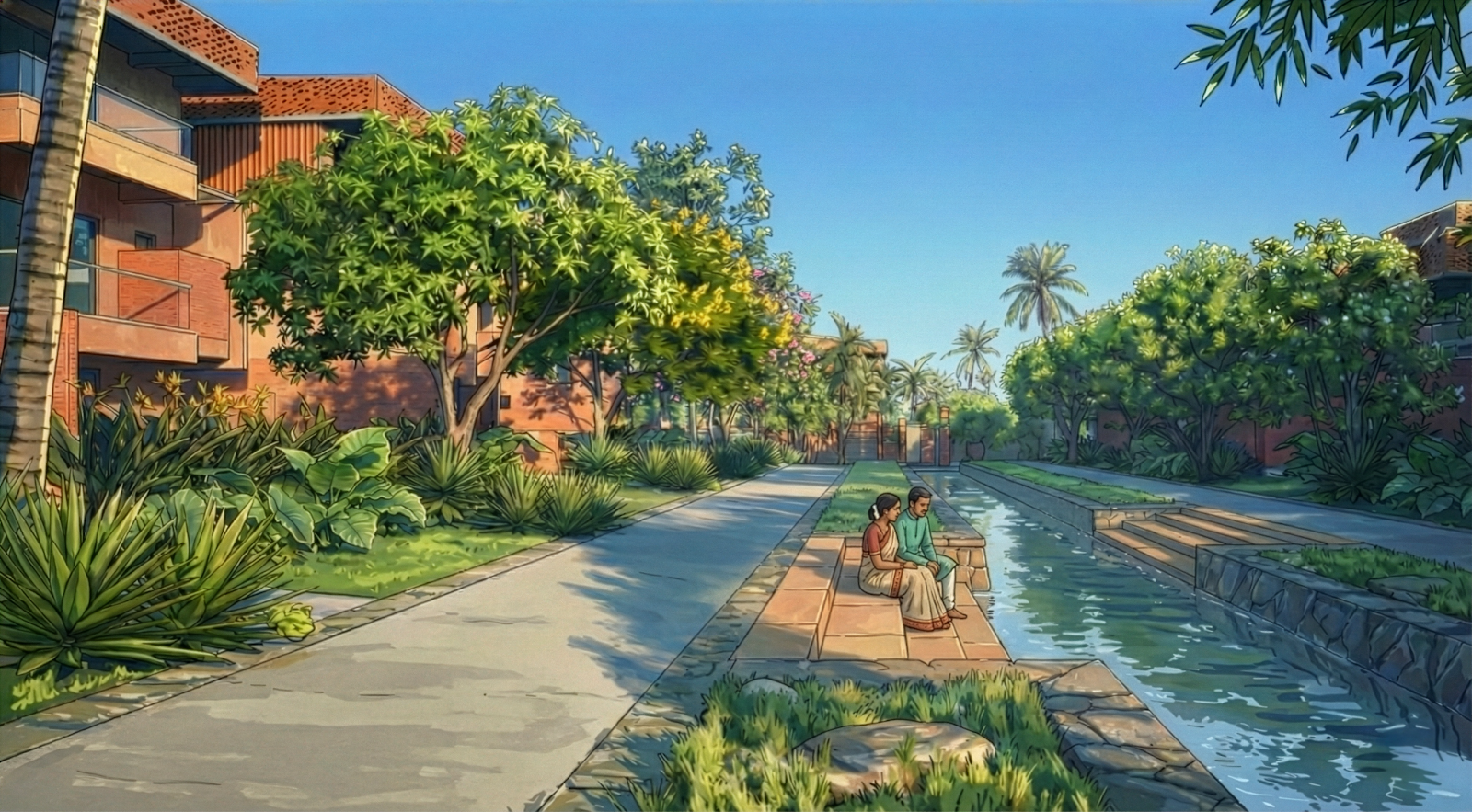
Even towns without rivers have steps—leading to tanks, gardens, or elevated platforms. Steps naturally create pause points. In Palgutta, a stepped plaza or seating edge can recreate the same informal social life.
8. Festival Spine & Procession-Friendly Street Width
Small towns transform during festivals—Bonalu, Dussehra, Ganesh Chaturthi. The street at Palgutta can be proportioned and equipped with hooks, niches, or lighting systems that allow festive decor and cultural gatherings. This embeds cultural memory into the very geometry of the space.
9. The Cinema Wall or Community Notice Board
A blank wall dedicated to posters, announcements, and community events can be timeless. It becomes a memory trigger for those who remember visiting small-town theatres or reading public notices plastered on walls.
Not Replication—But Resonance
The design of Organo Palgutta’s street is not about mimicry. We are not building a Warangal street in 2025. Instead, we are asking:
What made those streets feel loved, lived-in, and human?
What spatial cues made them unforgettable?
How can we honour those memories without freezing them in time?
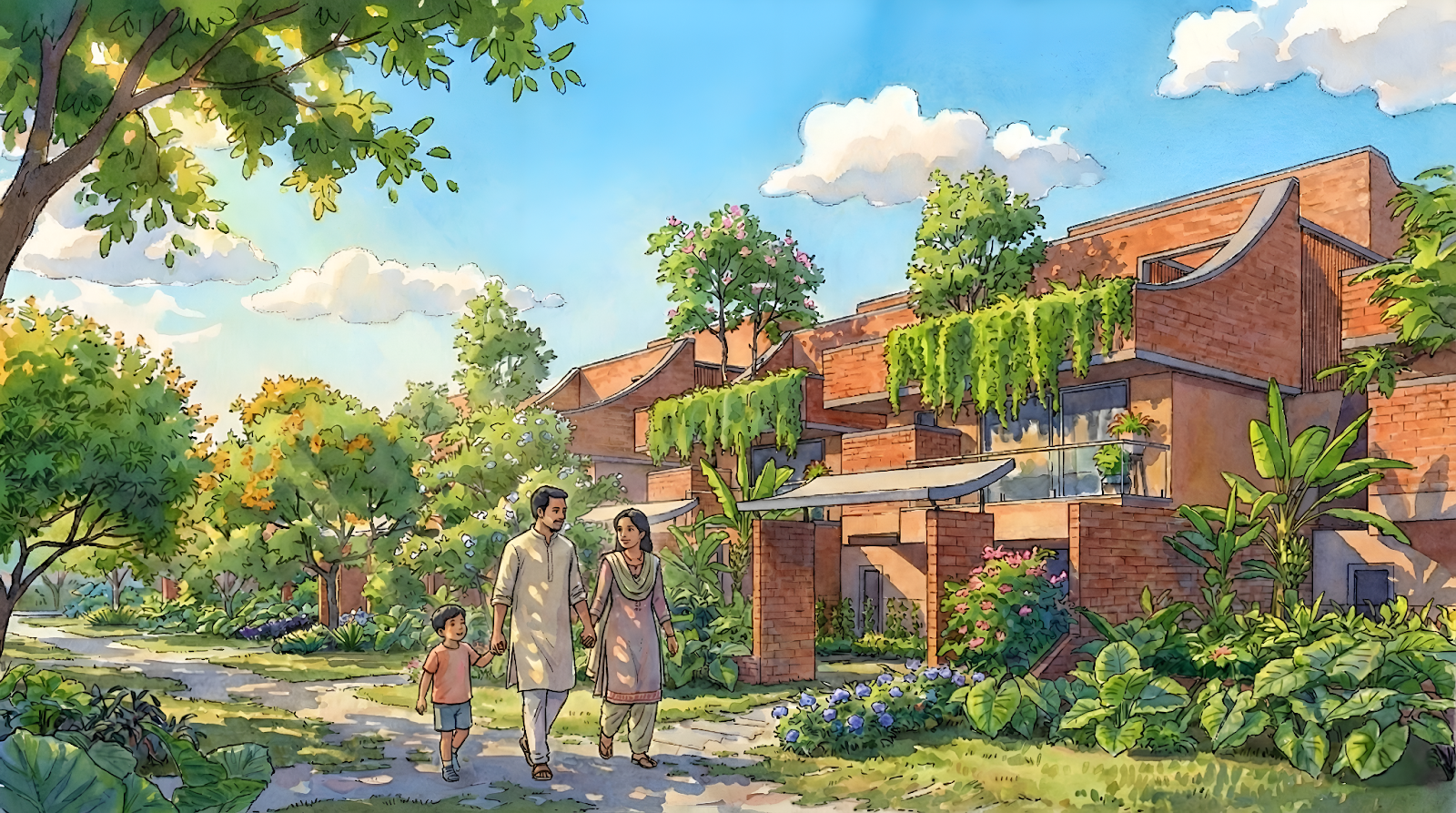
Each motif will be interpreted through our rurban design grammar—natural materials, ecological performance, comfortable microclimates, and timeless proportions. The result will be a street that feels both new and strangely familiar, modern yet rooted, functional yet full of soul.
At Organo Palgutta, we are crafting not just infrastructure but emotionally intelligent spaces—streets that whisper stories, invite belonging, and awaken childhood memories in gentle, unexpected ways.
This is the beginning of that exploration.
At its core, the home responds to three ideas that define the aspirations of the modern family:
comfort and privacy within the home, a seamless integration of interiors with nature, and an architectural character that feels rooted yet forward-looking. The design translates these values into spatial clarity, effortless flow, and a sense of tranquillity that permeates each room.
1. The Home Design Through the Lens of Family Life
Families live multi-layered lives. Spaces are never single-purpose—they evolve throughout the day, transitioning from quiet morning rituals to busy cooking hours, to relaxed evenings with family. The Palgutta home reflects this complexity with a planning logic that is intuitive, fluid, and responsive.
Ground Floor: Life Happens Here
The ground level is designed as an open, breathing heart of the home. The living, dining, and kitchen zones form one continuous spatial narrative, allowing family members to remain connected across activities. This spatial openness is not just functional—it fosters a sense of togetherness that is central to domestic life.
The kitchen—often the most intense, active space—enjoys natural light, cross-ventilation, and views of greenery. A wet kitchen tucked away ensures the main kitchen remains calm and well-kept, a detail deeply appreciated in households. The dining area acts as a social anchor, grounded by garden views and open enough to accommodate extended family gatherings.
A study/guest suite on the ground floor serves families with elderly parents, work-from-home professionals, or overnight guests. It reflects the design team’s understanding that flexibility is now a fundamental requirement of modern living.
First Floor: Private Realms with Emotional Warmth
The first floor houses the main bedrooms, each shaped around privacy, comfort, and morning light. The master suite is designed with generous proportions, a dedicated dressing area, and a balcony or garden-facing window that brings in soft south-east light—ideal for a calm wake-up experience.
Children’s rooms are playful yet grounded, with adaptable wall surfaces, ample flooring area, and framed views that inspire creativity. The positioning of rooms around a generous central passage ensures that each space feels private yet connected to the larger home.
Second Floor: A Sanctuary Above Ground
The upper level offers an entirely different experience: retreat.
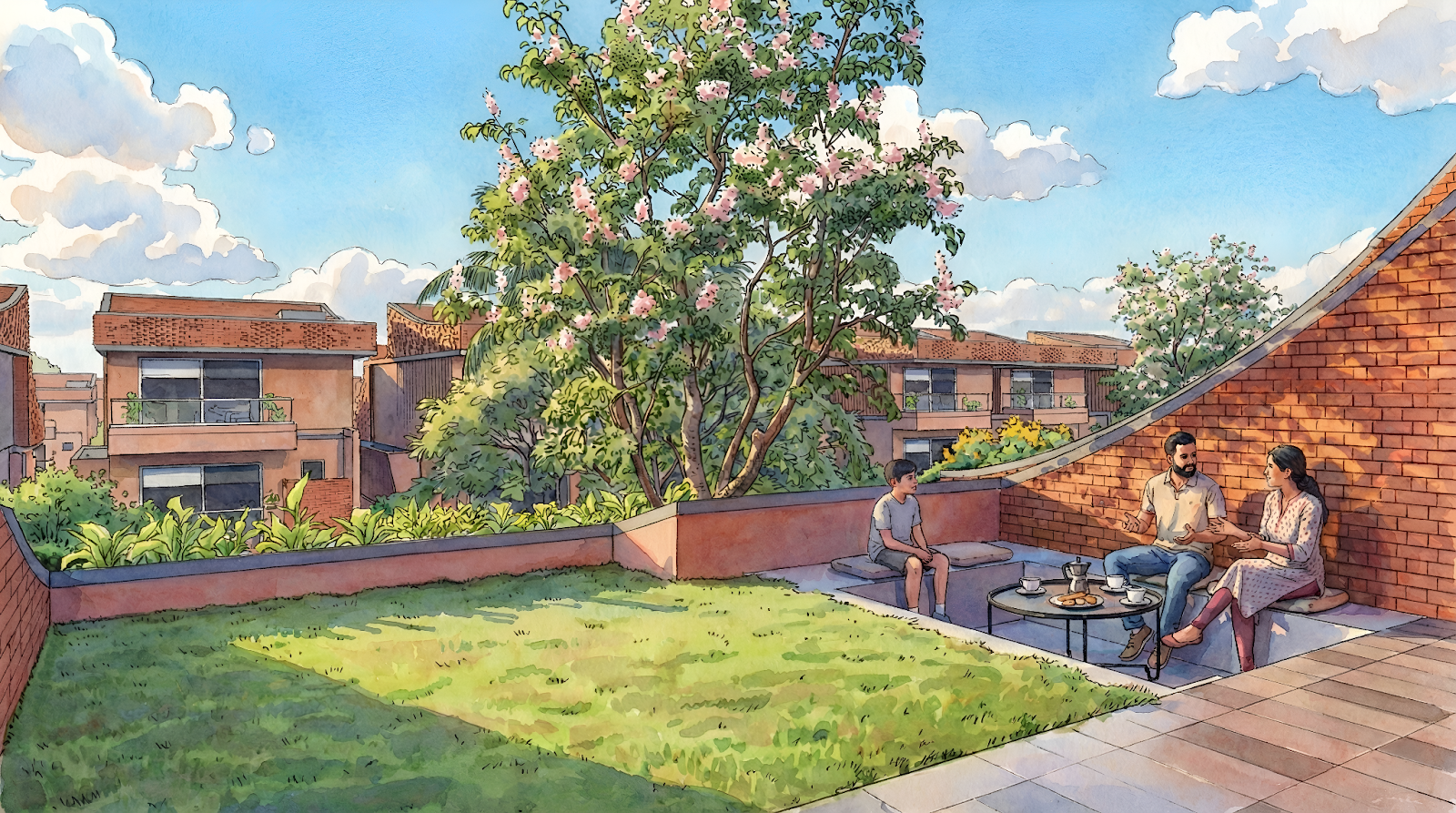
Here, an additional bedroom suite is paired with terraces, sunken seating edges, and roof gardens that allow escape—from noise, from work, from the speed of life. This floor becomes a sanctuary for reading, yoga, evening conversations, or simply watching the sky shift through the day.
Families often seek spaces for contemplative solitude, and this terrace-centric level is designed exactly for that purpose.
2. Interior Style: Warm, Textured, Grounded
The interiors of the home are neither minimalist nor ornamental—they occupy a nuanced middle ground that feels sophisticated yet deeply livable.
Materiality That Comforts
Natural textures dominate. The flooring, with its robust stone-like surface, offers both durability and visual grounding. The choice of wood tones, rattan, cane, and handmade decor accents infuse a sense of nostalgia without stepping back in time. This interior language is a soft homage to rooted living, where materials age gracefully and become part of the memory of the home.
Furniture That Breathes
The furniture adopts clean, contemporary lines but avoids sterility. Pieces are light, crafted, and open-legged—allowing the rooms to feel larger and better lit. Sofas and chairs are upholstered in soft, earthy hues, echoing the organic palette outside the windows.
Art plays a quiet but pivotal role. The curated artworks—tribal motifs, abstract pieces, and figurative compositions—create visual layers that reflect cultural sensibilities while fitting seamlessly into a modern aesthetic.
Lighting That Calms Rather Than Commands
The lighting is warm, understated, and layered. Ambient cove lighting combines with subtle spotlights and pendant accents to create mood rather than highlight. The result is an interior atmosphere that feels restful, embracing the family in a gentle glow rather than a clinical brightness.
3. Indoors and Outdoors: A Seamless, Living Dialogue
The spirit of the home lies in its strong relationship with the outdoors—a defining ambition of the design. Every major space frames views of greenery.
Every room has a sense of breathing, of permeability, of being connected to something larger than itself.
Window Walls That Invite Nature In
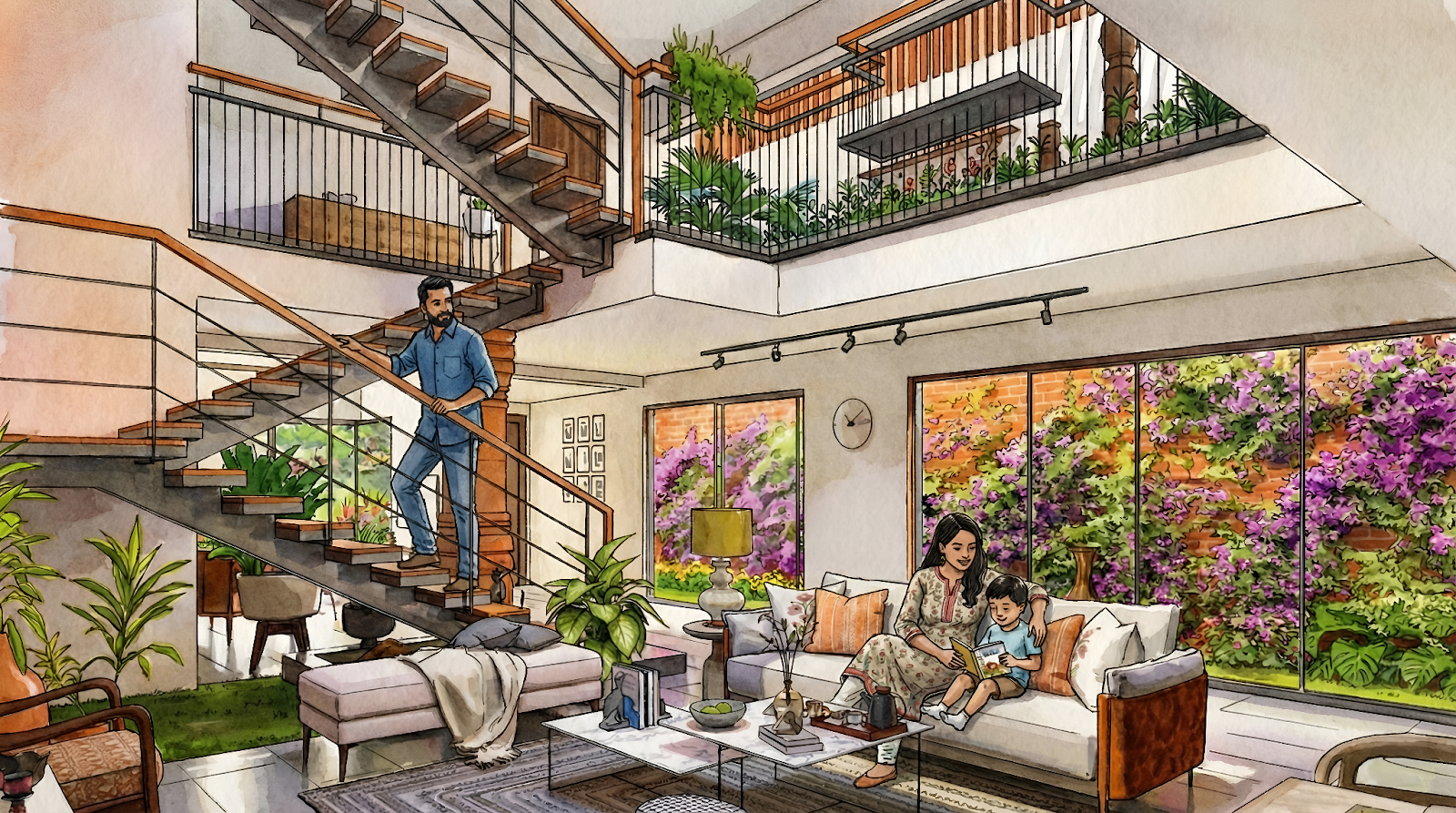
Large sliding doors dissolve the boundary between the living room and the garden. Bedrooms open onto balconies that act as personal retreats—morning tea corners, reading nooks, or places to watch a passing shower. The visual connection to planting, trees, and sky is constant and intentional.
Courtyards and Gardens as Spatial Anchors
The home is built around several green pockets:
- A personal garden along the ground floor for growing vegetables and flowers.
- A lush internal court that brings natural light deep into the home and creates a dramatic backdrop to the living areas.
- Balcony planters and terrace gardens that soften the architectural massing.
- A sunken seating terrace that becomes an intimate outdoor room.
These gardens are not decorative—they shape microclimates, improve air movement, reduce heat gain, and create a therapeutic daily environment.
Climate as Co-Designer
Ventilation paths have been planned to maximize cross-breezes. Window proportions, shading devices, overhangs, and strategically placed planting ensure that daylight remains soft and diffused.
The result is a home that feels cool, fresh, and connected to the land.
4. Architectural Language: Contemporary, Warm, and Rooted
The architecture of the Organo Palgutta home strikes a refined balance—a contemporary vocabulary expressed through earthy, regionally resonant materials.
Brick as a Cultural Anchor
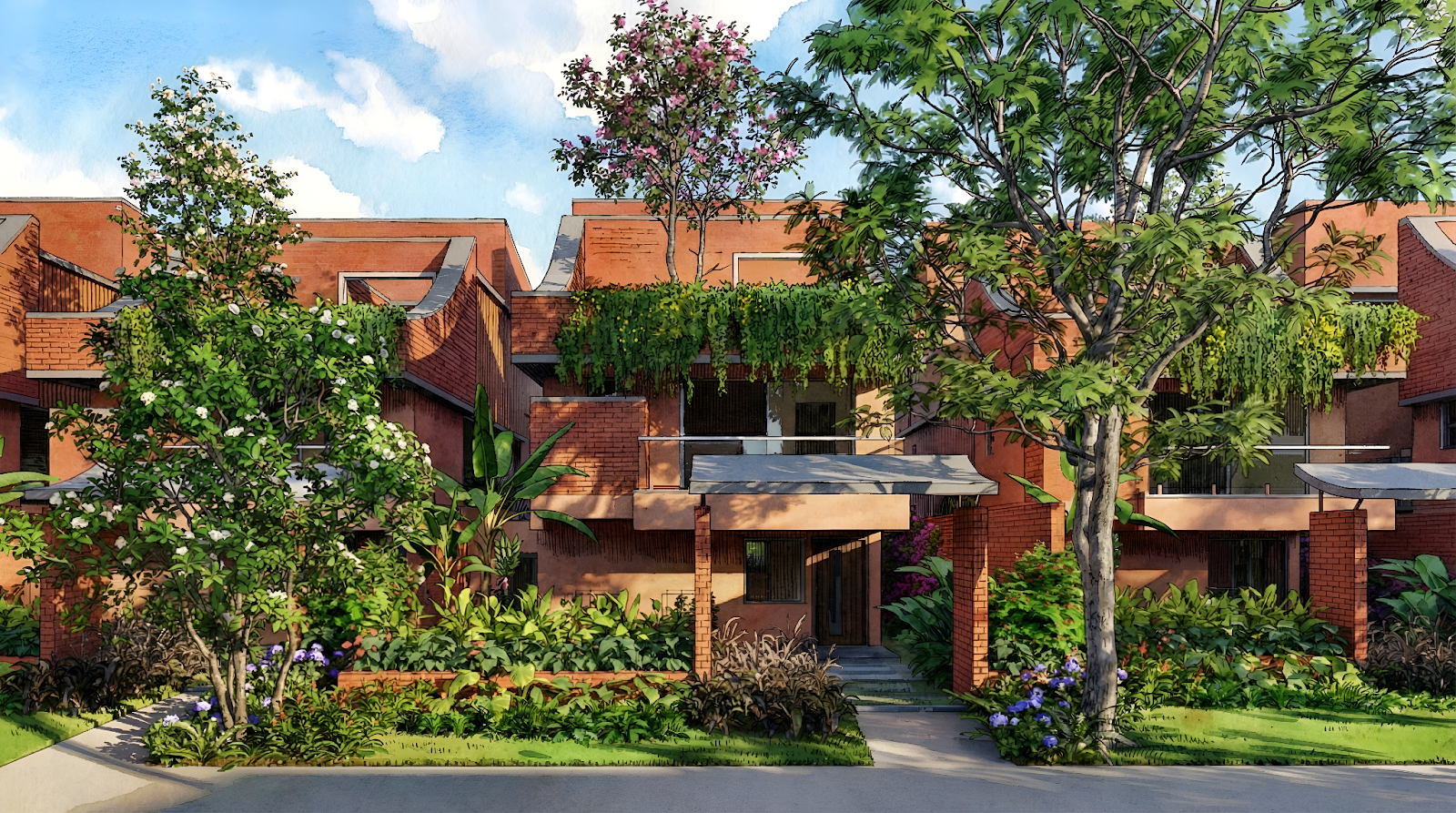
The use of exposed brick is not an aesthetic decision alone—it carries the memory of South towns, old institutional campuses, and the tactile richness of hand-made materials. Brick warms the façade, shapes shaded verandahs, and creates visual continuity across the cluster.
Soft Curves and Clean Lines
The form embraces both geometry and softness. Curved walls on upper terraces add a sculptural quality, breaking the monotony of straight lines. Horizontal slats provide privacy, shading, and rhythm. The combination lends the house a sense of ease—contemporary but not abrupt.
Sectional Drama
Double-height volumes, intermediate terraces, and staggered levels create dynamic sectional experiences within the home.
Standing in the living room, one sees layers of greenery, railings, walkways, and skylit planes.
The architecture becomes experiential, not just functional.
A Home That Ages Gracefully
Materials have been chosen for longevity—brick, stone, metal, lime or mineral-based exterior finishes. Over time, these will weather, soften, and gain patina, making the home feel even more a part of its landscape.
A Home That Celebrates the Art of Living Well
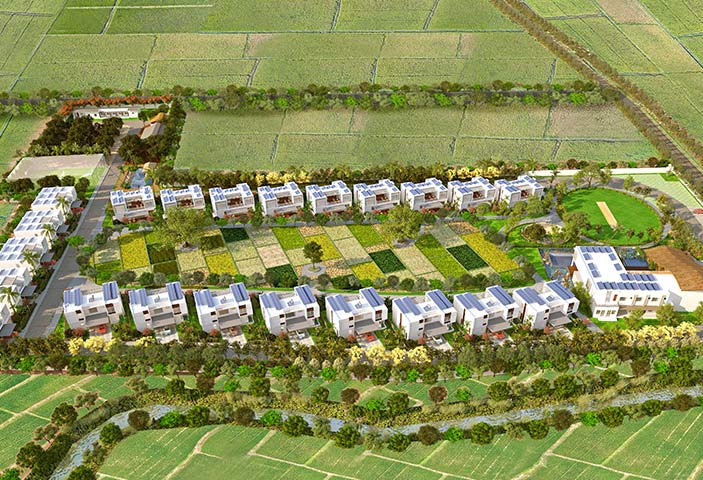
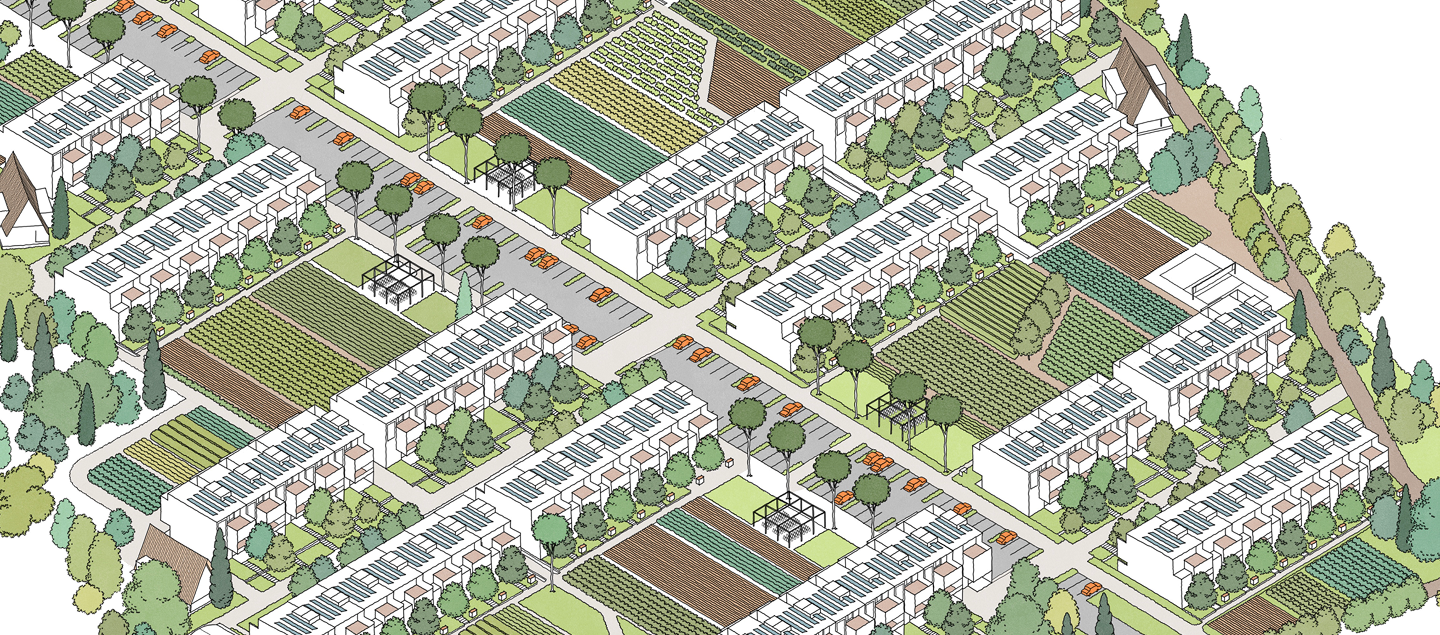
The Organo Palgutta residence is not designed as a static object—it is designed as a living environment that responds to culture, climate, and commhomey. From the thoughtful spatial planning to the grounded interiors, from the immersive outdoor connections to the warm architectural expression, the home embodies the principles of rurban living.
It is a place where a family can cook together, rest together, grow food, host gatherings, watch monsoons arrive, enjoy winter mornings, and live with intention. It is a home that supports everyday rituals while also inspiring new ones.
Above all, it reminds us that architecture, when thoughtful, does not merely shelter—it uplifts, nurtures, and becomes a quiet partner in the story of a family’s life.
Related blogs


%2520(1).jpeg)
.png)