.svg)
.avif)
Veranda, Not Just an Entry
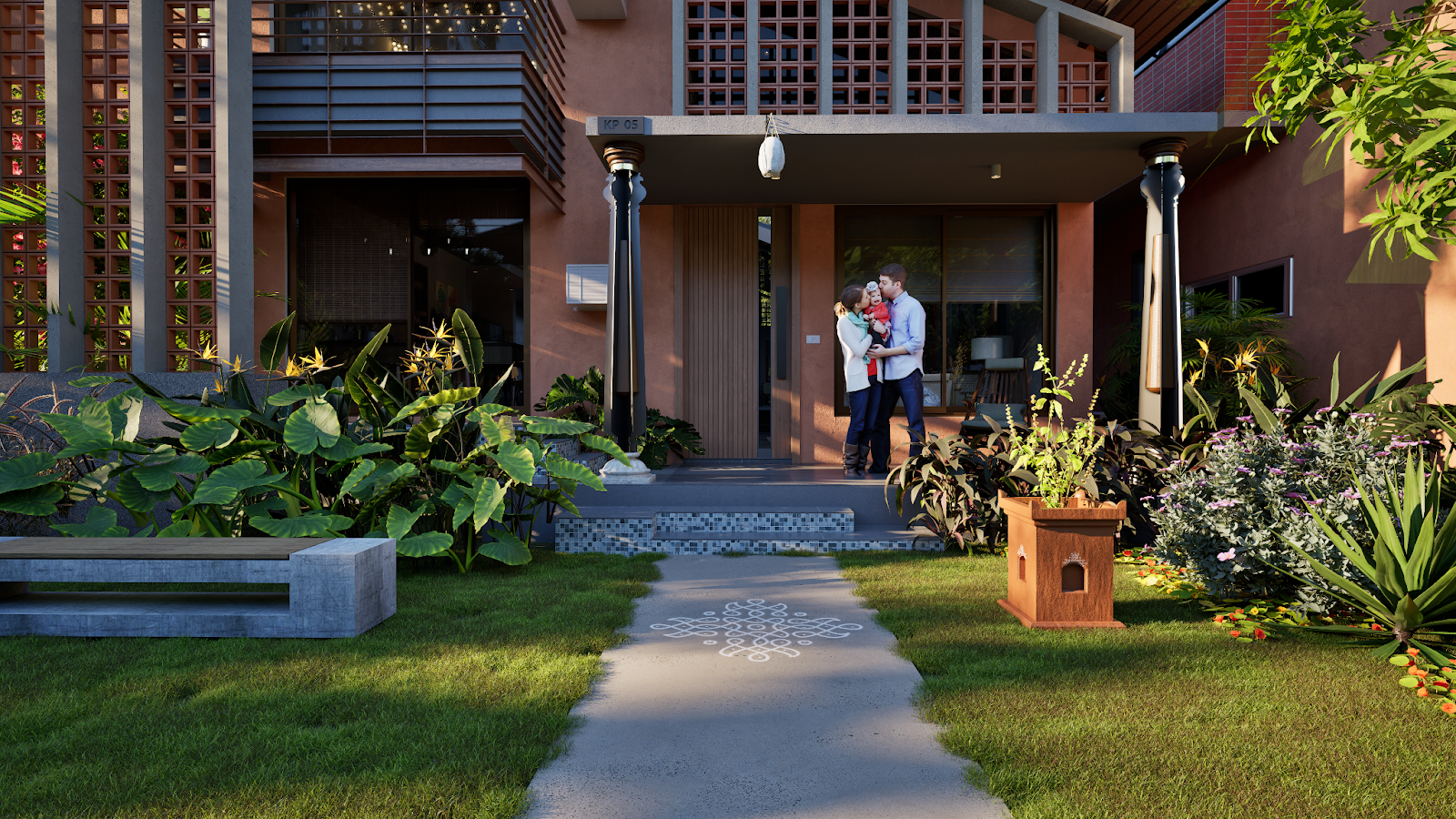
At Ibrahimpalle, the veranda is not nostalgia. It’s intent.
Long before we turned to balconies or high-walled porches, the veranda held its own in the rhythm of everyday life. And at Ibrahimpalle, we bring it back not as an afterthought, but as a deliberate design choice. It’s a space of social exchange, quiet observation, and unhurried transitions.
In the homes we design, this is where pace changes.
The Threshold That Greets, Not Guards
Across many homes in the South, especially before the 90s, the veranda was not an extra, it was the first room. A space where the home met the world.
Whether it was weddings planned under its eaves, neighbours lingering in evening conversation, or grandfathers stringing jasmine into brass bowls, the veranda held moments that other rooms didn’t. It wasn’t always called a living space. But it lived more life than most rooms inside.
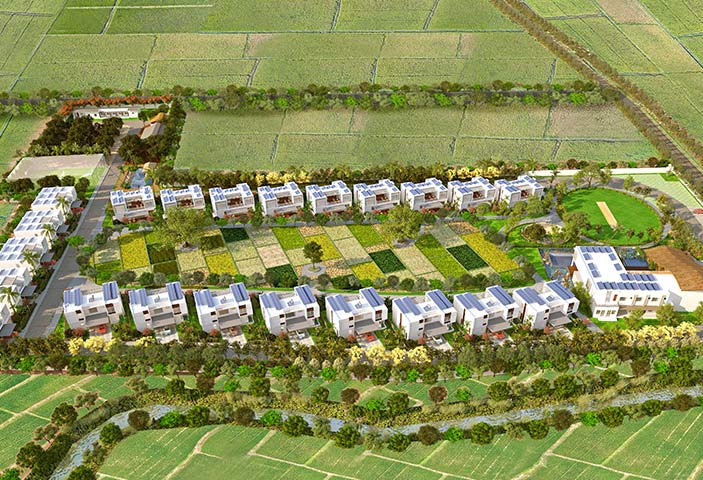
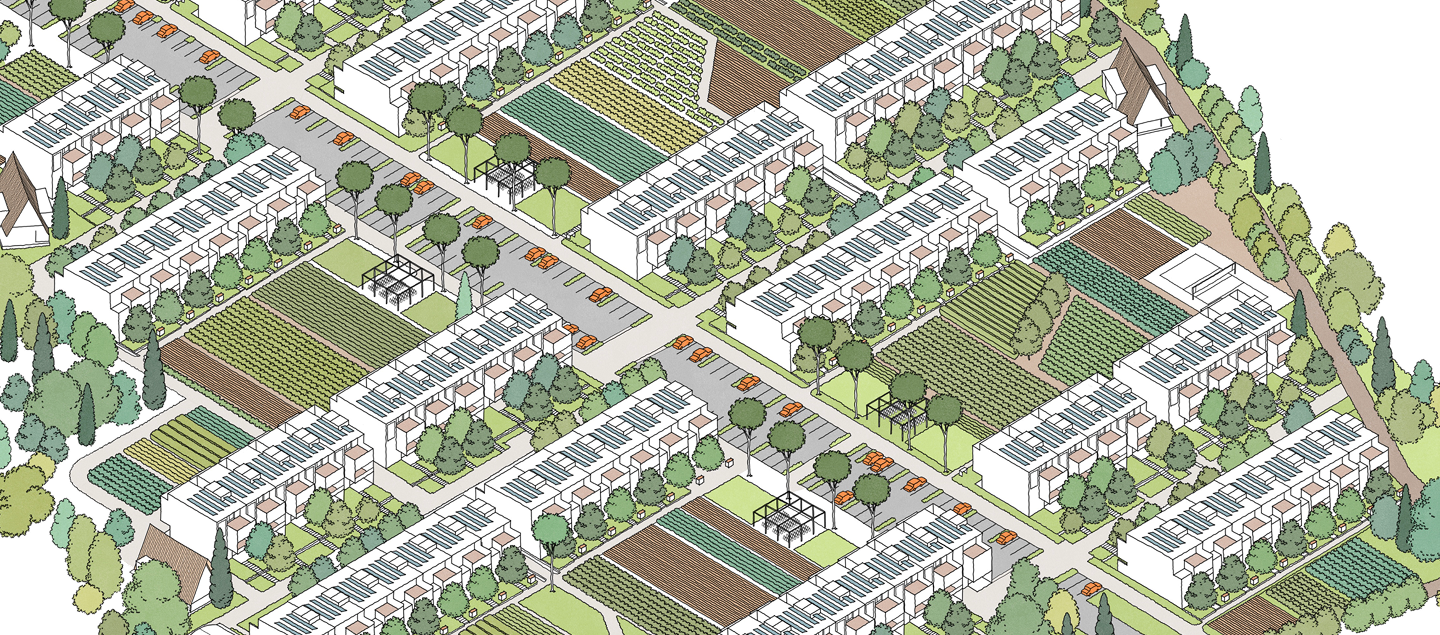
At Ibrahimpalle, the veranda serves as a soft edge between the private home and the shared cluster street. It offers both invitation and pause. You can sit without speaking. Watch without being seen. Welcome without being rushed.
It makes space for conversation, for waiting, for watching the world move just slowly enough.
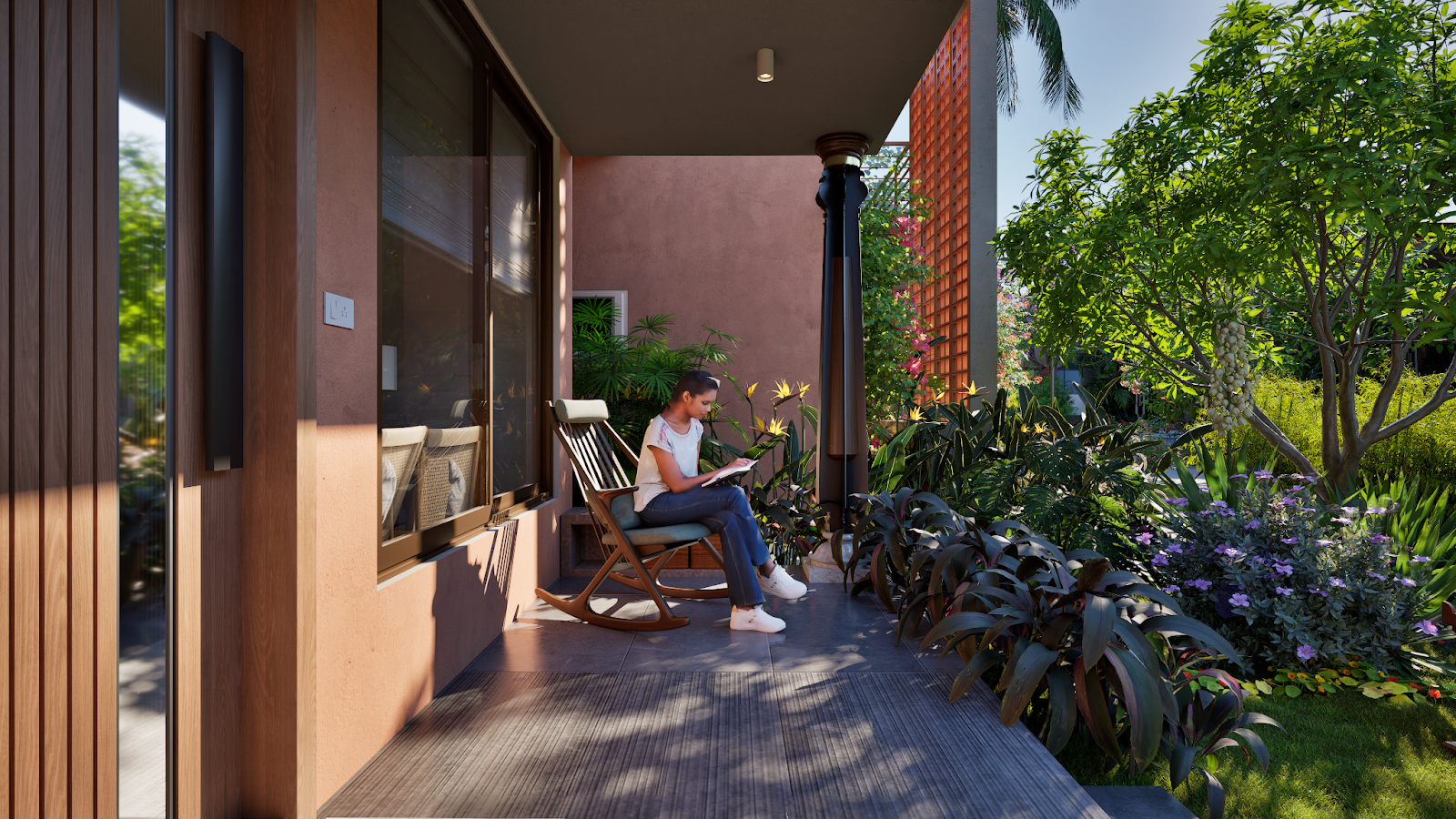
Designed With Purpose, Not Just Form
The verandas at Ibrahimpalle were not added to meet a brief. They were designed to serve a purpose, both spatial and social.
- They’re oriented to face community-facing streets, like the inner cluster lanes or fruit-lined avenues, so there is always something to engage with, a passerby, a flowering tree, a distant hill.
- Built-in benches make sitting a natural extension, not an event.
- Deep overhangs shield the veranda from heat while allowing light in.
- Columns and edge planting shape visibility while keeping the space open. You can participate without being on display.
These spaces are meant to be used. Not occasionally, but daily.
They change with time of day, and with season. They belong to no one use-case. You don’t enter a veranda with a plan. But more often than not, you leave it having had a moment worth keeping.
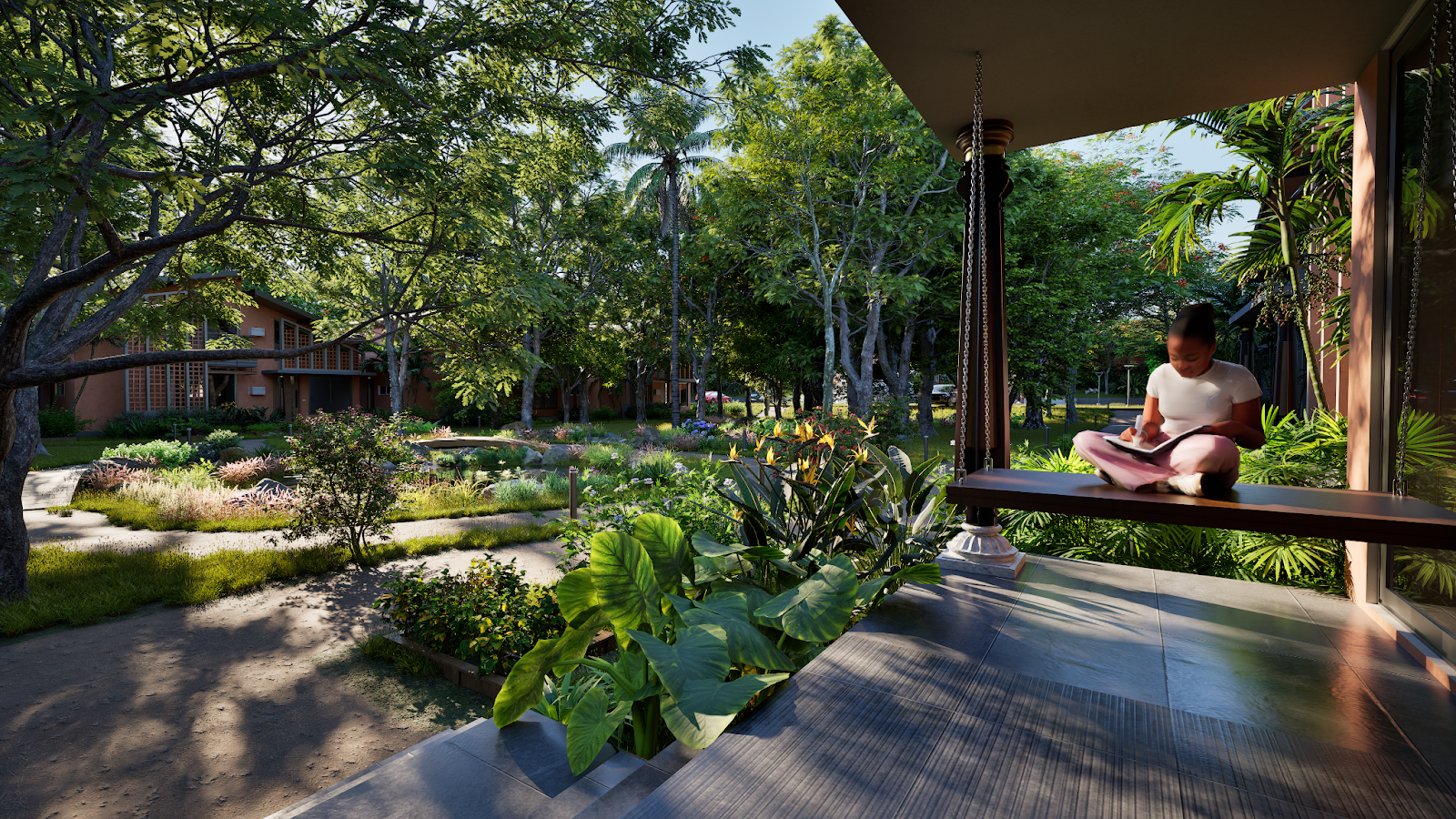
Everyday Living, Held Lightly
Some homes require rooms to be declared, a reading corner, a tea table. The veranda does not. It adapts.
- On a hot afternoon, it’s where you stretch your legs with a book and let the breeze do what it does best.
- On a rainy evening, it’s where a friend joins you for coffee and silence.
- During festivals, it becomes the extra seat for cousins cracking jokes and munching pakoras.
- On weekdays, it may just be the place where your parent sips tea, reading the paper as the day wakes up.
There is no signboard for what the veranda is. It simply becomes what the day asks of it.
The Veranda as Cultural Memory
In many of our own lives, the veranda is where memory begins.
A birthday photo on a plastic chair. A waiting visitor offered cool water. A parent polishing shoes on Sunday. The deep scent of monsoon soil. The sound of slippers approaching. These details form part of a home’s emotional architecture.
In much of today’s homebuilding, such spaces are replaced with compact foyers or utility balconies. But at Organo, and especially at Ibrahimpalle, we’ve chosen to retain what we believe matters. Not for aesthetic reasons alone, but because these gestures of design make space for the rituals that stay with us.
The veranda is not a performance. It’s a presence.
It allows us to slow down before stepping inside. It softens the transition between outside and in. And in doing so, it keeps us rooted to our homes, our habits, and our ways of being.
A Respectful Pause
We also understand that the veranda carries meaning across generations.
It’s a place where kolams are drawn in the morning. Where banana stems may be tied during a festival. Where slippers wait in rows. Where the act of entering the house is not hurried, but mindful.
These rituals aren’t outdated. They’re deeply relevant for those seeking rhythm and rest in the everyday. And design plays a quiet role in keeping that rhythm alive.
In Ibrahimpalle, the veranda is not a space we added after planning the rest of the house. It is part of the structure that gives the home its pause and its welcome.
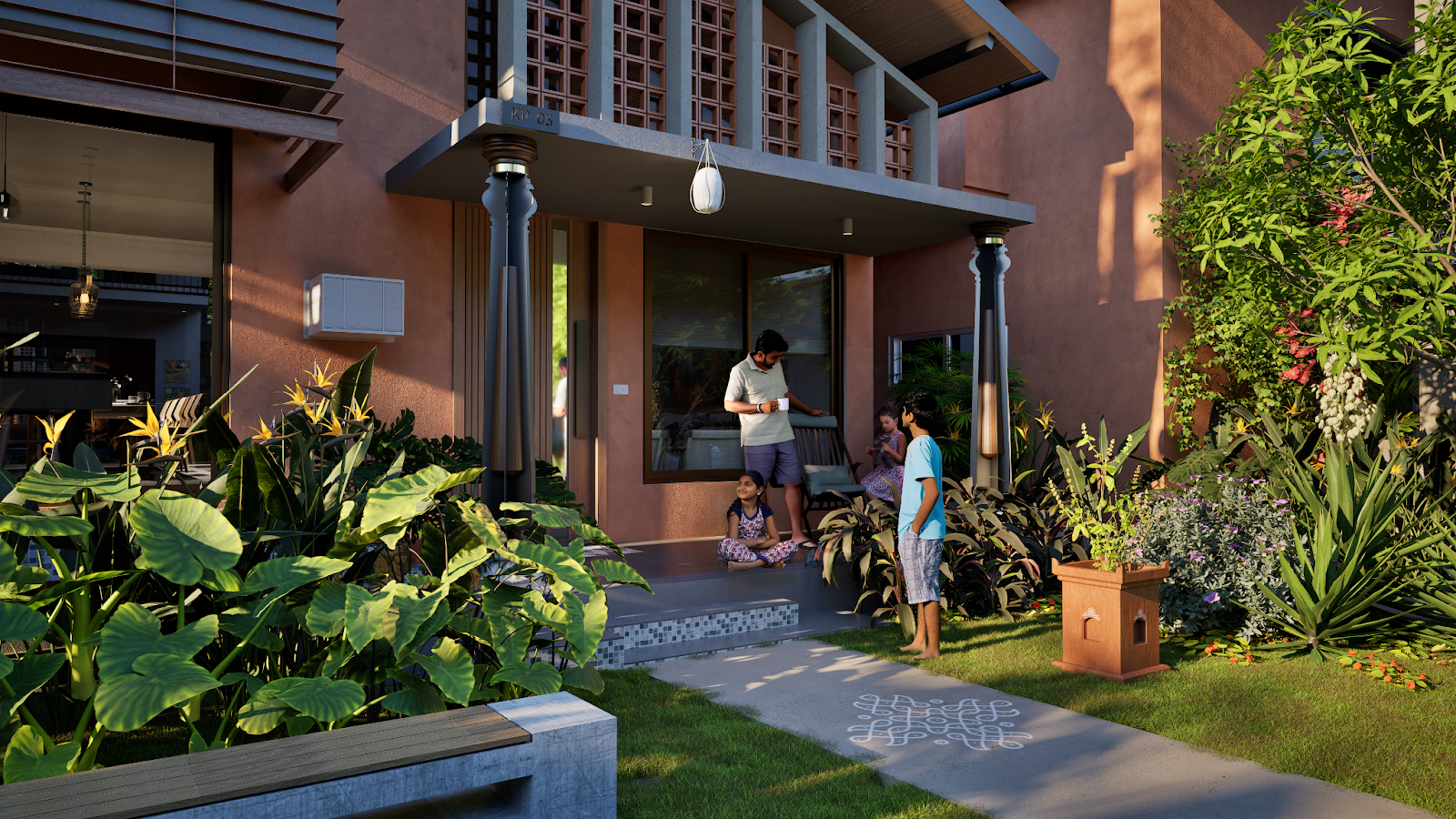
Quote Callouts (for layout or print highlights)
“The veranda is not a performance. It’s a presence.”
“It is the room where the formality of the indoors softens into the poetry of the outside.”
“You don’t enter a veranda with a plan. But more often than not, you leave it having had a moment worth keeping.”
“Design should not erase memory. It should carry it forward."
Related blogs


%2520(1).jpeg)
.png)